
by Sabedin Sherifi
How Albanians were displaced from Nish, Leskoc, Toplica, Vranje and Masuria and how dozens of villages in Anamorava became settlements for immigrant families. From Niš, Leskoc, Toplica, Prokupla, Kurshumlija, Vranje, Masurica, Jabllanica and Pusta Reka towards Gjilan – a story of expulsion, suffering, shelter and the beginning of a new life.
A winter that changed history
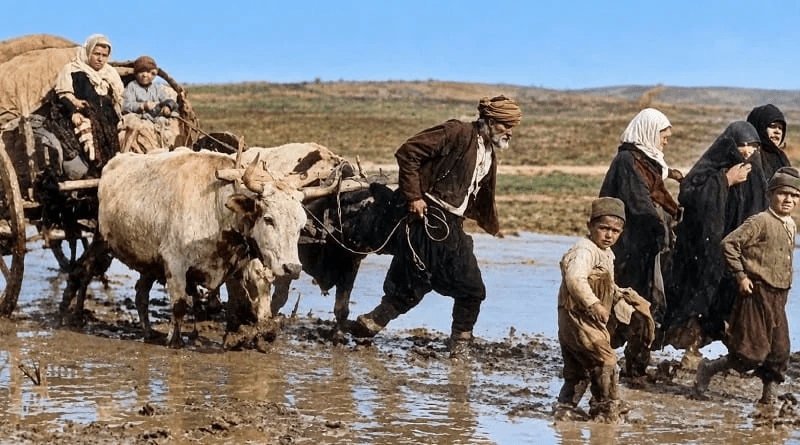
In the winter of 1877–1878, thousands of Albanian families were forced to leave their homes in the Sandzak of Nish and the surrounding provinces.
The Russo-Ottoman War of 1877–1878 and the change in borders after the Congress of Berlin brought about a major demographic change in this part of the Balkans.
Historical sources document the displacement of a large part of the Muslim population, while Albanian studies emphasize the large scale of the expulsion of Albanians from these regions.
Those who were forced to leave were later known as muhajireh.
But behind this name lies a heavy human history. Behind them were homes, lands, fields, livestock, graves of ancestors, and places where families had lived for generations.
The difficult path of migration
The migration was no ordinary journey. Many families left in harsh winter conditions.
On the migration routes there was hunger, cold, disease, fatigue, and lack of shelter.
Historical sources also describe violence, looting, and loss of life during the expulsion. There is no single, undisputed figure for the number of victims.
Some studies cite tens of thousands of victims from violence and extreme conditions of displacement, but these figures should be distinguished from the total number of displaced people.
Therefore, when talking about victims, a distinction must be made between those who were killed and those who lost their lives from hunger, cold, disease, and exhaustion.
From Nish to Gjilan
After the departure, Albanian families headed towards the territories that remained under Ottoman administration. Some of them settled in Kosovo.
Gjilan was one of the main centers of settlement.
A study on the history of Gjilan and Anamorava notes that after the Russo-Turkish War and the decisions of the Berlin Congress, a large number of Albanians known as muhajirs came to Anamorava and Karadak, mainly from Pirot, Vranje, Niš, Leskoc and other regions.
Even Ottoman documentation proves the presence of the Muhajirs in the Gjilan slums.
In the document BOA, MVL 1024/71/4, the muhajirs settled in the kazata of Prishtina, Gjilan and Vushtrri are mentioned, in relation to their supply.
So, the Muhajirs were not just refugees who temporarily passed through Gjilan. A large part of them settled here and started a new life.
They didn’t just settle in the city
One of the most interesting pieces of evidence is the distribution of families in the villages of the Gjilan kaza.
The catalog “The Expulsion of Albanians from the Sandzak of Nish 1877/78”, published by the State Archives Agency of Kosovo, contains data on families and settlements related to this process. The list is long.
Villages and Muhajir families
Bilinica – Bublicët, Glasovikët
Bresalc – Byçmetët, Sakicollët
Lower Budrikë – Bublićët
Bukovik – Berjashtë, Gurgullofcët
Çaparc – Wednesday
Cërnica – Vranocët**.
Dobërchan** – Masuricët, Lebovët, Dedićët, Bufçët, Shahiqët, Tërstenët, Gërbavci
Draganca – Dushullofci, Ramabaj, Makedonci, Rukofc, Radec, Llozan**.
Gadish** – Dubovs.
Gumnishte – Gurgullofcët, Magashët, Prestreshët, Popovcët, Starabajët, Vranofcët, Rafunët, Dragobuzhdët, Velegllavët, Masuricët.
Kishnapolë – Miskiqët, Zhinipotokët.
Kmetoc – Cvircët.
Kokaj – Klaiqet, Dragidellët.
Kravarica – Llapashticët, Ghigolët, Pasjaqët, Jabuqët, Hasanovcët, Dragobuzhdët, Hërgojët, Brestofcët, Llozanët, Dubovët**.
Upper Kufcë** – Kosaça/Stubllakët, Ramabajët, Byçmetët, Brestovcët**.
Lipovica** – Lausanne**.
Upper Livoc** – Momcila, Rukofc, Vlasal, Dobov, Bucal, Krivac, Brestofc, Shillov, Jabuq.
Lower Livoc – Stublakët, Dedicët, Brestovcët, Buvcët, Dubovët, Krivacët, Vllasakët, Mërshicët**.
Lladovo** – immigrant family in the Suka** neighborhood.
Upper Makresh** – Govorets, Vranocets, Poroshticets**.
Makresh i Poshtem** – Ramabaj, Llapashtic, Mërkoj, Vranoc, Radec, Govor, Brestoc, Bajrakt**.
Malisheva** – Slishani, Baralita, Bublica, Llazall, Cvircak**.
Nosalë** – Prekoqellnica and other immigrant families**.
Parallovë** – Konjufcët, Dragidellët**.
Pasjak** – Dubovci, Konjufc, Statofci, Zhigolci, Kostanici, Slishani, Cerkovici, Llapashtic.
And this is not the complete list. The catalog continues with other settlements.
A new demographic map of Anamorava
This list shows the extent of the change. The Muhajirs were not settled in just one limited area. They were spread out over many parts of the Gjilan kaza.
From Bilinica to Pasjak, from Dobërçan to Livoq, from Makresh to Kravarica, the traces of families coming from the Sandzak of Niš became part of the new demographic structure of Anamorava.
What countries did they come from?
The term “Muhajirs of Nish” should not always be understood as if every family had come from the city of Nish. The area of migration was much wider.
The families came from: Nish, Leskoci, Toplica, Prokuplje, Kuršumlija, Kosanica, Jabllanica, Pusta Reka, Masurica, Vranje, Polanica, Gërdelica and other areas.
Studies on migrations after 1878 document this wide range of origins of the Muhajirs.
This also explains a phenomenon known in many Kosovo Albanian families: a family may say “we are from Niš”, while more detailed documents may show that its ancestors had lived in a village in Toplica, Leskoc, Vranje or Masurica.
How were they received in Gjilan?
This is one of the most interesting questions. The Muhajirs arrived in Gjilan after a difficult period of war and displacement. They needed shelter, food, land, and security.
Their settlement took place within the framework of the Ottoman administration, while on the ground they were settled near the population already living in Anamorava.
The process should not be romanticized: the settlement of large numbers of families also created problems for land, pastures, and economic resources.
Studies on the settlement of Muhajirs in Kosovo show that these issues could also cause difficulties with previous owners and residents.
However, in Gjilan and the surrounding area, the emigrants gradually became part of local society. New family, economic, and social relationships were created.
Future generations no longer considered Gjilan just a place of refuge, but as their new place of living.
From refugees to residents of Anamorava
For many families, coming to Kosovo was initially intended as a temporary solution. Some hoped to return to their homelands. But the political reality changed.
The new border was consolidated and return became increasingly difficult. Ottoman documents even show cases of emigrants who wanted to return to Niš to sell or take over their remaining properties there, but encountered administrative and political obstacles.
Thus, the families that had arrived as displaced persons gradually became permanent residents of Anamorava.
Family names preserve history
One of the most powerful traces of this history are family names.
The Masurics, Llapashtic, Dubov, Vranoc, Brestovc, Ramabaj, Gurgullofc, Dragidell, Mërkoj, Zhigol, Konjufc, Slishan and many others are part of the lists related to this migration wave.
In some cases, the family name itself can be linked to the previous place of residence. This opens up a great opportunity for genealogical research.
If Ottoman documents, family records, and family memories are compared with each other, the path of a family can be reconstructed.
The story doesn’t end here.
The list of villages in Gjilan is only part of the history. Archives can also provide data on the number of families, heads of households, place of origin, lands given for settlement and assistance received.
For this reason, the history of the Gjilan emigrants should be studied not only as the history of a migration, but also as the history of specific families.
A complete map would connect: NISH – LESKOC – TOPLICË – PROKUPLË – KURSHUMLI – VRANJË – MASURICA – JABLLANICA – PUSTA REKA
With GJILAN – BILINICA – BRESALCI – DOBËRÇANI – GUNMISHTA – LIVOÇ – MAKRESHI – MALISHEVA – PASJAKU and dozens of other settlements.
A human story that should not be forgotten
More than 140 years later, the descendants of these families still live in Anamorava.
Many of them remember the word “muhaxhir”, the name of the country they came from, and the stories of their ancestors about the long journey to Kosovo.
Behind this word lies a painful story: the loss of one’s homeland, leaving in the winter, deaths along the way, loss of wealth, and starting over.
But another story is hidden: shelter, rebuilding lives, creating new families, and transforming Anamorava into a home for future generations.
…………………………
Main sources
Kosovo State Archives Agency, “Expulsion of Albanians from the Sanjak of Niš 1877/78”.
Emin Pllana, “Causes and manner of migration of Albanian emigrants from the territory of the Sanjak of Niš to Kosovo (1877–1878)”, Albanological Research.
Fehmi Rexhepi, study on the economic, social and political aspects of Gjilan and the surrounding area.
Marenglen Verli, study on the demographic situation and migrations from the Sanjak of Niš.
Documentation of the Ottoman Archive (BOA), including documents on emigrants settled in the kazats of Gjilan, Prishtina and Vushtrri .
Article
https://mediafokus.info/muhaxhiret-e-nishit-rruga-e-dhimbshme-drejt-gjilanit-dhe-rrethines/?

