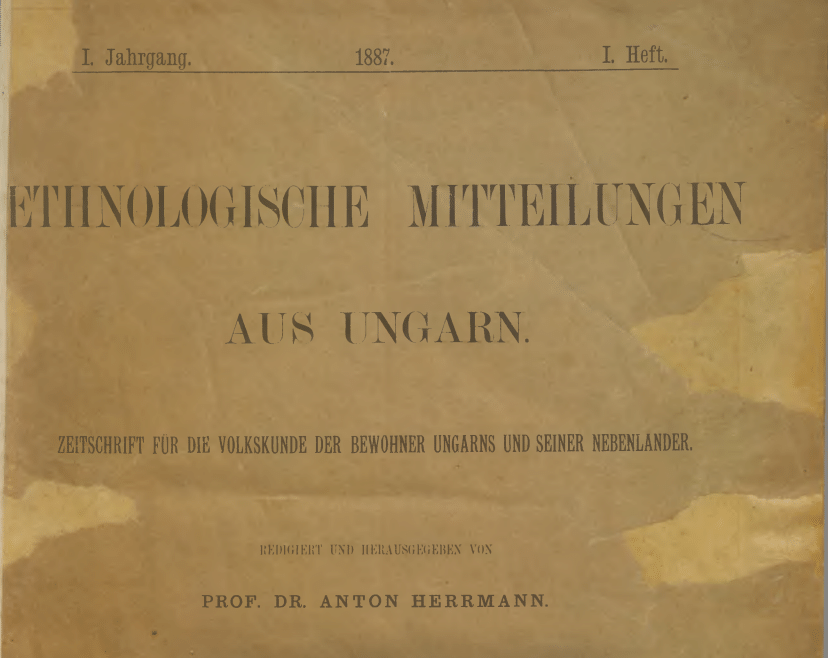

Extracted from the work of Friedrich Salomo Krauss (1859–1938), Austrian ethnographer and folklorist.
Summary
The critic gives a deeply negative assessment of the moral world represented in the South Slavic guslar tradition. Although he acknowledges that some of the songs possess considerable beauty and artistic value, he argues that the collection as a whole presents a society dominated by violence, revenge, sexual transgression, treachery, and extreme brutality.
The songs contain stories of murder, incest, sexual misconduct, betrayal, blood feuds, mutilation, the killing of children, and cruel forms of execution. For the critic, these are not merely isolated incidents but recurring features of the social and moral world represented by South Slavic epic poetry.
His central criticism is therefore directed at the moral character of the epic tradition itself: the songs depict a world in which physical force and revenge frequently take precedence over law, restraint, and reconciliation.
1. Violence as a central feature
The most prominent characteristic of the guslar songs, according to the critic, is their pervasive violence. Conflicts between individuals and families are repeatedly resolved through killing, revenge, and physical punishment.
The logic of blood revenge is particularly important. An injury or murder creates an obligation to retaliate, and retaliation produces another injury that demands further revenge. Violence therefore becomes self-perpetuating. The critic sees this as evidence of a social order in which personal and family vengeance has greater authority than an established system of justice.
2. Murder and extreme brutality
The songs contain numerous examples of exceptionally brutal killings. One of the most disturbing episodes involves a brother who kills his sister and her husband and has two small children impaled. Even more shocking, in the critic’s presentation, is the fact that the man’s mother praises him for these actions.
The episode demonstrates how radically the normal moral structure of family relationships can be overturned in the epic world. The family, which should provide protection and solidarity, becomes instead an arena of violence.
The critic also draws attention to exceptionally cruel forms of execution, including death by quartering. Such descriptions contribute to his picture of an epic tradition fascinated by physical suffering and spectacular violence.
3. Incest and sexual transgression
Incest constitutes another major element of the critic’s moral indictment.
The story of Nahod Simeon is particularly striking. Stjepan commits incest with his sister Jela, who subsequently gives birth to a son. The child is abandoned and later grows up without knowing his origins. As a young man, he encounters his own mother without recognizing her and enters into a sexual relationship with her. Only afterward does the mother recognize her son through his ring.
For the critic, this story represents one of the most disturbing aspects of the tradition. The extraordinary calm with which the revelation is treated further intensifies the sense of moral strangeness. The story is therefore used as an example of a world in which even the most fundamental boundaries of kinship can be violated.
4. Betrayal within the family
The critic also emphasizes the frequency of familial betrayal. A sister betrays her own brother, while other stories depict relatives turning against one another. Family loyalty, therefore, cannot always be relied upon.
This is particularly significant because South Slavic epic poetry is often associated with ideals of family honor, loyalty, courage, and solidarity. The stories discussed by the critic reveal a darker side of the same tradition: kinship can become the source of treachery as well as loyalty. The result is a highly unstable moral world in which even the closest human relationships can be destroyed by revenge, greed, or personal desire.
5. Sexual misconduct and exploitation
The critic also points to several episodes involving sexual misconduct. One girl from a respectable family is said to encourage an intruder to have sexual relations with her. Elsewhere, girls act as intermediaries in sexual relationships for financial gain.
These episodes reinforce the critic’s impression that sexual morality is frequently violated within the epic world. Sexuality becomes associated with manipulation, greed, betrayal, and the destruction of family honor. The critic consequently includes sexual transgression alongside murder and revenge as evidence of the broader moral disorder represented in the songs.
6. Violence against children
Children are not protected from the violence of adults. The most extreme example is the killing of two small children during an act of familial revenge. Their deaths are particularly significant because they have no direct responsibility for the original conflict.
The critic’s emphasis on this episode illustrates the collective character of the violence represented in the songs. Revenge is not necessarily directed only against the person responsible for an injury. It can extend to relatives and descendants. Thus, the cycle of revenge destroys the distinction between guilt and innocence.
7. Revenge as a moral principle
The critic’s broader concern is the status of revenge within the epic tradition. Revenge is often represented as an obligation connected with honor. A person who fails to avenge an insult or murder may appear weak or dishonored. Yet once revenge is taken, it creates a new grievance requiring further retaliation. The result is an endless cycle of violence.
The critic therefore sees the culture of revenge as fundamentally destructive. Instead of restoring social order, vengeance perpetuates conflict. This is one of the most important moral criticisms implicit in his treatment of the guslar songs.
8. The rule of force
The critic characterizes the world represented by the songs as one governed by force. Power belongs to those capable of imposing their will through physical strength. Justice is consequently unstable because there is no neutral authority capable of stopping the cycle of violence.
This helps explain the frequency of murder and revenge in the narratives. Violence is not merely an exceptional response to extraordinary circumstances; it becomes one of the principal mechanisms through which social conflicts are resolved.
The critic therefore sees the epic world as one in which physical power frequently replaces moral and legal authority.
9. Religious and magical elements
The South Slavic epic tradition is not exclusively concerned with violence. The critic also notes religious and supernatural elements, including the appearance of the vila, magical practices, and spells cast by maidens. These elements reveal a traditional worldview in which Christianity, popular religious practices, and older supernatural beliefs coexist.
Their presence, however, does not substantially alter the critic’s overall assessment. Religious and magical motifs exist alongside murder, revenge, sexual transgression, and family violence. The result is a complex but deeply archaic moral universe.
10. Forgiveness as an alternative to revenge
The critic does acknowledge an important counter-motif: the forgiveness of blood feuds.
This suggests that the tradition is not completely dominated by vengeance. It also contains the possibility of reconciliation and the deliberate abandonment of inherited violence.
This is significant because it reveals a conflict between two moral principles within the epic tradition. One demands revenge in defense of honor; the other allows the cycle of violence to be broken through forgiveness. The existence of this counter-theme makes the folklore more morally complex than a simple celebration of violence.
11. Heroism and brutality
The critic does not deny the artistic or heroic qualities of South Slavic epic poetry. He explicitly recognizes that some songs are beautiful and that particular pieces are exceptionally impressive. His criticism therefore concerns the coexistence of heroism with brutality.
The same epic tradition can celebrate courage, loyalty, and sacrifice while also presenting murder, vengeance, and cruelty as admirable or legitimate actions. This creates an important moral ambiguity. Heroism is not necessarily associated with compassion or restraint. A hero may be praised precisely for his willingness to commit violence on behalf of his family or honor.
12. The overall picture of moral degradation
The critic ultimately sees the collection as presenting a society characterized by what he describes as bloodshed and baseness. His language suggests that he regards the songs as representations of a period in which moral and social order had broken down. His assessment can be summarized through several recurring characteristics:
- violence replaces legal justice;
- revenge replaces reconciliation;
- family loyalty can turn into family betrayal;
- sexual boundaries are repeatedly violated;
- children become victims of adult conflicts;
- physical strength determines power;
- murder and mutilation can be treated as legitimate forms of punishment;
- religious and magical beliefs coexist with extreme violence.
Taken together, these elements produce the critic’s image of a society dominated by force and moral disorder.
Conclusion
The critic’s treatment of South Slavic guslar poetry is fundamentally a moral critique of the world represented in these songs. He sees recurring patterns of murder, incest, betrayal, sexual misconduct, blood revenge, mutilation, and violence against children as evidence of an epic tradition rooted in a harsh and brutal social environment.
At the same time, he recognizes that this tradition possesses considerable artistic power. Some songs are described as beautiful or magnificent, and the existence of themes such as forgiveness, loyalty, religious devotion, and heroism demonstrates that the tradition cannot simply be reduced to violence.
The significance of the critic’s argument lies precisely in this contradiction. South Slavic epic poetry presents heroism and brutality side by side. Courage may be celebrated, but so may revenge. Family loyalty may be idealized, yet families can also become the setting for incest, betrayal, and murder. Justice may be sought, but it is often pursued through private violence rather than law.
For the critic, this makes the guslar tradition a revealing representation of a society in which honor, kinship, revenge, and physical force could dominate moral life. His criticism is therefore not that the songs lack cultural or artistic value, but that the moral world they portray is deeply violent, unstable, and degraded.
Source
Ethnologische Mitteilungen aus Ungarn. “Südslavisches” review on p. 378.

