

by Dr. Qazim Namani
Abstract
Namani xamines the history and development of Pristina from prehistoric times to the period after the Second World War. The city’s geographical position on the Kosovo Plain, close to important rivers, mining areas, and major regional communication routes, contributed significantly to its development as an economic, administrative, and cultural centre.
Archaeological evidence indicates that the territory surrounding present-day Pristina has been inhabited since the Neolithic period, approximately 7,000 years ago. Archaeological remains from the Bronze Age, Iron Age, Roman period, Byzantine period, and Early Middle Ages have been identified in and around the city. The nearby ancient city of Ulpiana was an important regional centre, and Pristina subsequently developed into an increasingly significant settlement.
During the Middle Ages, Pristina gained political and economic importance. The city possessed a castle, religious buildings, and commercial connections with Dubrovnik and other regional centres. During the fourteenth and fifteenth centuries, Dubrovnik merchants and other trading communities were active in the city. Following the Ottoman conquest, Pristina underwent significant social, religious, architectural, and urban changes. Mosques, hammams, tekkes, markets, inns, and other public buildings were constructed, and the city developed into an important regional commercial and administrative centre.
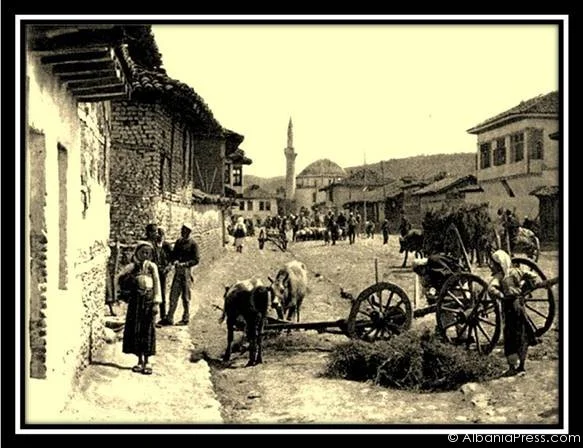
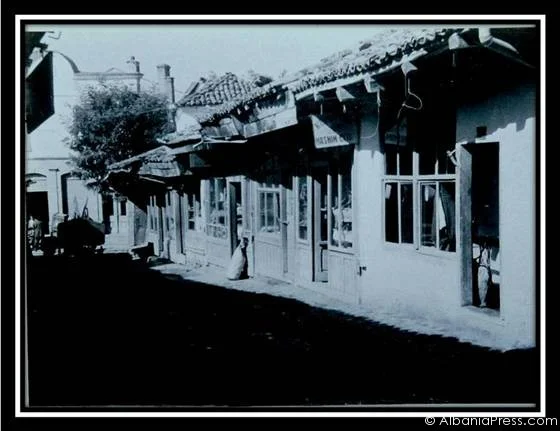
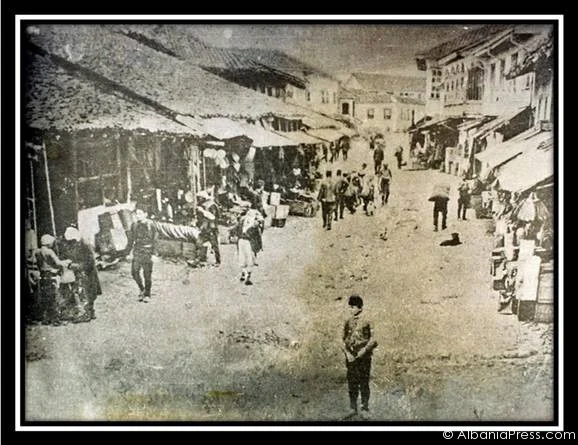
The seventeenth and eighteenth centuries were marked by wars, political conflicts, destruction, and demographic changes. The Austro-Ottoman conflict of 1689–1690 had a particularly significant impact on Pristina and its surrounding areas. During the nineteenth century, the city experienced political uprisings, Ottoman administrative reforms, economic development, and the expansion of crafts and trade. In 1874, Pristina became the administrative seat of the Kosovo Vilayet, further strengthening its political importance. The city also developed a substantial traditional marketplace and a range of crafts and commercial activities.
The Balkan Wars of 1912–1913 represented a major turning point in Pristina’s history. According to Namani, the entry of Serbian forces was accompanied by violence, killings, population displacement, and major changes in the city’s demographic composition. The interwar period was subsequently characterized by further demographic and political changes, including Serbian colonization, confiscation of Albanian property, and migration of Albanian inhabitants.
After the Second World War, Pristina became the administrative centre of Kosovo and underwent rapid urbanization and industrial development. At the same time, large parts of the historic city were demolished. The old bazaar and several historic religious and civic buildings disappeared as modern urban planning transformed the traditional Ottoman urban structure. Particular attention is given to the destruction and disappearance of Albanian and Jewish cemeteries and other elements of the city’s cultural heritage.
Overall, Namani presents Pristina’s history as a complex process shaped by prehistoric settlement, antiquity, medieval commerce, Ottoman urban development, warfare, demographic change, and modern urbanization. It also emphasizes the importance of documenting, researching, and preserving the remaining architectural and archaeological heritage of the historic city.
SUBJECT:
1. The geographical location and extent of Prishtina
2. The territory of the city of Prishtina was inhabited 7000 years ago
3. The Byzantine emperor Johan Kontaguzeni wrote about Prishtina in 1342
4. Prishtina became an important seat during the Middle Ages
5. Prishtina at this time had 9 neighborhoods, which according to their names indicate that they had only a Christian population.
6. In 1690, with the arrival of the Ottomans and Tatars, the entire country suffered greatly, especially that of the Prishtina district
7. In 1822, about 3000 Albanians from Kosovo made an attempt to go to Istanbul to demand the resignation of Maliq Pasha Gjinolli
8. In the first half of July 1844, the Turkish army led by the governor of Rumelia and Omer Pasha entered Prishtina to suppress the Albanian uprising.
9. In Prishtina, in June and August 1837, 80-140 people died from mortars every day.
10. In 1874, the headquarters of the Vilayet of Kosovo moved to Prishtina and 3 years later, the Turkish-language magazine “Kosova” began to be published.
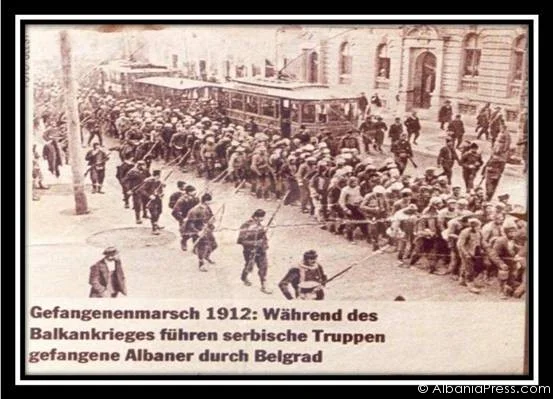
11. Prishtina was heavily destroyed during the Balkan War, when Serbian forces entered the city.
12. Prishtina was occupied by the Serbs on October 12, 1912.
13. In early 1913, a population census was conducted and no Albanians were registered in Prishtina.
14. The phase of the demolition of Albanian cemeteries in Prishtina
1. The extent and geographical position of Prishtina
Prishtina lies between the small rivers Prishtevka and Vëllesha, which flow from the mining hills on the western side of the Gallap highlands. On the southern and western sides, Prishtina is bordered by small hills that descend into the fertile lands of the Kosovo Plain. The altitude ranges from 585m, 640, 670 and about 700 m above sea level in some neighborhoods of the city.
Scientific studies on the etymology of the name Prishtina have not yet given a stable conclusion, but many researchers explain the name of Prishtina (Pristina castra) from ancient Indo-European languages, which has the meaning of ancient, of the initial phase, something old.
2. The territory of the city of Prishtina was inhabited 7000 years ago
The territory of the city of Prishtina was inhabited 7000 years ago. During the works of the case in the city, traces of civilization from the Old Neolithic culture were found: Prishtina Hospital Complex, Glladnica to Graçanica. New Neolithic culture: at the spinning mill, Brërrnica, Matiçani. Bronze material culture: Badoc Field, Brërrnica e Poshtme, Kolovica, Grashtica, Keqekolla. Iron Age: Badoc, Matiçan, Tauk-Bahçe, Shkolla normale. Roman Age: Ulpiana, Grashtica, Siqeva, Keqekolla. Byzantine Age-early Middle Ages: Matiçani.
Many important roads have passed through the city of Prishtina, roads coming from Bosnia, the Naissus-Lissus road, from Scupi, etc. According to the Tabula Peutingeriana, the Viciano road station of the Naissus-Lissus road was between the villages of Uglar and Çakllavica, near Prishtina.
Somewhere about 7 km southeast of Prishtina is the large ancient city of Ulpiana. Apparently, Ulpiana, ruined and plundered in the early Middle Ages, lost its importance to Prishtina as a locality in its vicinity. The fertile lands in the Kosovo Plain and the mining areas in the Gallapi highlands influenced the progress and development of this settlement.
The first writings published so far for Prishtina as a toponym are from a document of the Croatian prince, Mutimir, from the year 892, where it is said that Prishtina was also a sword-bearer with the palace.
From the literature and other archival documents, Prishtina is mentioned from the first Ragusan contacts with Prishtina that we find recorded in the late seventies of the 13th century. At this time, the Ragusan nobleman of Albanian origin Gregorius Marini de Petrana (1253-1280) was appointed consul in Brskovo. To reach Brskovë, Gregorius M. De Petrana passed through Prishtina, among other places. In a document issued by Prishtina in 1325, the Dubrovnik people are asked to provide the plaque of Saint Mitre.
3. The Byzantine emperor Johan Kontaguzeni also wrote about Prishtina in 1342
The Byzantine emperor Johan Kontaguzeni also wrote about Prishtina in 1342, who at that time provided some important information about the locality.
According to the writings of Johan Kontaguzeni, it is said that in Prishtina there was a palace with large rooms, for state gatherings, for judicial processes, for solemnities and feasts. Prishtina also had a castle, which was destroyed by Sultan Mutati I during the siege of the city in 1389.
This is also confirmed by Evlija Çelebi in 1662 when he wrote that the Prishtina castle built by King Milutin was destroyed by Sultan Murat I after entering Prishtina. According to Serbian sources, the palace was built by King Milutin between the present-day clock tower and the bazaar mosque. A citizen, while carrying soil after opening a foundation near the statistical office and the stone mosque (bazaar), had also carried some marble stones from this place. The stones have stone plastic and are surrounded by flutes and, according to experts, were made in the ancient period.
Whether they were brought from Ulpiana or some other locality can only be confirmed after observing the excavations for construction in that area. Based on the data mentioned above for the location of the castle between the clock tower and the bazaar mosque, we can affirm that these data are late, after the construction of the mosque and the clock tower. Here, when it comes to the bazaar mosque, we must take into account the Llukaqi mosque that was built at the theater, near the covered bazaar of Prishtina.
In any case, the place where the city castle is said to have existed is also evidenced by these discovered stones that suggest that Prishtina had its castle since the early Roman or Byzantine period. This remains to be confirmed only after archaeological excavations in this locality.
Also, during the removal of soil from construction sites in Pristina in 1997, a pillar base was found on which the symbol of the cult of the sun and the cross were carved next to each other. It is noted that this stone, made of lime mortar and mixed with ground ceramics, also has signs of burning, which suggests that we are dealing with a pillar of some cult object that, in addition to the cross, also has astral symbols from the pagan period and which was also burned. The location of this stone is unknown, but it was found thrown into the open pit by the tile factory in Pristina. The finding of this stone is yet another piece of evidence to believe that Pristina was a pre-medieval settlement.
4. Pristina became an important seat during the Middle Ages
Pristina became an important seat during the Middle Ages. Before the Battle of Kosovo, Pristina had become the capital of the province and remained as such for a long time after this battle.
In addition to the buildings in Pristina, the Graçanica Monastery, as a cultural monument of particular importance, was built nearby on the foundations of an earlier church.
It can be seen that Pristina and its surroundings at that time had many monuments, and the presence of these cultural monuments, such as the Graçanica Monastery, in terms of artistic values, entered the most perfect creativity of Europe and the world.
The development of Pristina is also evidenced by the facts of the settlement of foreign merchants and Dubrovnik merchants in 1387. In the same year, the Dubrovnik merchant Marko Zvizdic, who lived in Artana, in his will on November 9, 1387, gave 5 ducats for the maintenance of the Church of St. Mary in Pristina. This shows that Pristina was a developed commercial center even before the Battle of Kosovo. In addition to the Church of Our Lady of Sorrows, in 1421, another unnamed church is mentioned in the records of the small Ragusa council.
5. Pristina at this time had 9 neighborhoods, whose names indicate that it had only a Christian population.
In Pristina in 1426, there was also the Dubrovnik consulate. In Pristina, in the 14th and 15th centuries, a large number of Dubrovnik merchants operated, who traded with the most developed cities in the region. Dubrovnik merchants, Genoese, Jews, etc. mainly dealt in noble metals such as gold, silver and gold. After the Ottoman conquest, several sacral and profane objects of oriental style were built in Pristina, such as mosques, hamams, tekkes, tombs, civic houses, etc. According to the census of the Vushtrri sandjak from 1477, Pristina at this time had 9 neighborhoods, whose names indicate that it had only a Christian population.
During the 15th century, the Pristina basin included several ores known at the time. At this time, prominent scholars such as Mesihi Prishtina, who with his works “Mesihi Divani” although written in Turkish poetry, has great literary and historical value. Mesehi Prishtina died in Bosnia in 1512. In the 15th century, Prishtina had a total of 20 neighborhoods.
According to Shtjëfën Gasprit (1671), an Albanian reporter, Prishtina was one of the main cities of Kosovo. Prishtina was the administrative center of the mining industry of Kosovo and the mining region of Artana (Novobërdë).
During the late Middle Ages, many well-known personalities of the time stayed and wrote in Prishtina, such as; Jovan Kontaguzeni, the Hungarian king Vladislav II, Peter Bogdani, Haxhi Kallfa, Evliya Çelebi, etc. Peter Bogdani, of Albanian origin, the archbishop of Skopje and Sofia, reported to the Vatican that Prishtina had 3,000 houses. At that time, Evliya Çelebi wrote about 2,600 large and beautiful houses, highlighting the palace of Allaj Beg and the courthouse, the two large hammams, hospitality and civic culture. There were 11 inns in Prishtina, among which the most famous at that time was the inn of Haxhi Beg.
Based on the data in 1689 given by Coronelli in “Iliricum” and in “Corso delli fiumi Drino e Boiana nella Dalmatia”, in 1689 Prishtina had 4,000 houses. At this time, Pristina had 360 villages and a number of them had been burned.
The city has two baths, one is the Fatih bath in the market, and the other is the old bath. In one corner of the Fatih bath there is a sign, for this reason this bath is called holy and is visited a lot. In Pristina there are 3000 shops which are few for this city, there are very good grapes and pears here, write the travelogues who visited Pristina in the 17th century.
6. In 1690 with the arrival of the Ottomans and Tatars, the whole country suffered greatly, especially that of the Pristina district
. In 1690 with the arrival of the Ottomans and Tatars, the whole country suffered greatly, especially that of the Pristina district. There many villages remained deserted, most of them were burned and disappeared by the Turks and Tatars.
Pristina was weakened during the Austro-Turkish War, when Pristina became the headquarters of the Austrian general Piccolomini. At the end of the Austro-Turkish War of 1689-1690, Ottoman and Tatar troops entered Pristina and took great revenge on the Albanians. As Gjergj Bogdani, the nephew of Archbishop Pjetër Bogdani, later wrote, even though Pjetër Bogdani had died and been buried, he was exhumed by the Ottomans and thrown like dog food in the middle of the Pristina square. Pristina was ruled by the Gjinolli during the 18th and 19th centuries.
After the assassination of Maliq Pash Gjinolli in 1809, one of his chambers became a museum. The museum of the Gjinolli feudal family of Albanian origin was a very interesting cultural institution similar to those of feudal courts in European countries, which was destroyed during the Balkan Wars in 1912. The museum collection of the Gjinolli family had a considerable number of exhibits of historical and ethnographic importance, among them was the guillotine of Jashar Pasha.
Pristina is also mentioned by Felix De Bozhur, according to whom in 1812, Pristina had two fairs, autumn and spring, where many merchants from the east and west participated.
7. In 1822, about 3,000 Albanians from Kosovo made an attempt to go to Istanbul to demand the resignation of Maliq Pasha Gjinolli,
who at that time was known as a tyrant and ruled Pristina.
Many ancient crafts were developed in Pristina, including the craft of hasra. In addition to these crafts, leather workers, potters, making household utensils from clay and metals, making traditional clothing, etc. were also known. Pristina
today lacks a city museum; during construction in the city, excavations for opening the foundations were not monitored by the competent institutions, so as a result of this situation, many movable exhibits were thrown into the abyss and covered with soil and debris. In 1997, during excavations in the city, argentius-glama enameled vessels were found in the rubble of the tile factory where soil was dumped.
The reforms in the Ottoman Empire began in 1892 and the new reform commission consisted of well-known and respected people of Albanian origin. Danish Bey was from Pristina, who later became the Minister of Internal Affairs of the Empire.
8. In the first half of July 1844, the Turkish army led by the Serasqer, the governor of Rumelia, and Omer Pasha entered Pristina to suppress the Albanian uprising.
In the first half of July 1844, the Turkish army led by the Serasqer, the governor of Rumelia, and Omer Pasha entered Pristina to suppress the Albanian uprising. The headquarters of the Serasqer became Pristina. The rebels retreated to the mountains of Pristina. Omer Pasha had declared to the English consul that 7000 Albanian rebels had retreated to the mountains near Pristina. The Ottomans were registering the Muslims of Pristina who refused to provide recruits for the nizam. On March 8, 1845, the English consul in Thessaloniki announced that the Albanians in the vicinity of Pristina would not provide recruits without force.
From the loot that the Ottoman soldiers made during the suppression of this uprising, they became very rich.
The Austrian consul writes that the Albanian rebels occupied Pristina in the spring of 1844. Pristina fell into the hands of the rebels in March 1844, when Abdyrrahman Pasha of Pristina fled to Prizren to his friend Izet Mehmet Pasha. Izet Pasha had given 6000 men to return Andyrrahman Pasha to Pristina, but the rebels stopped this attack and kept Pristina in control.
9. In Pristina, in June and August 1837, 80-140 people died from the mortar every day.
In Pristina, in June and August 1837, 80-140 people died from mortars every day. In 1846, Maliq Bey decided to send all the heads of the Albanian Catholic families to a besieged place in Pristina. All the prisoners were put in heavy shackles on their hands and feet, with a heavy chain around their waist and tied to one leg. This was a weight of 40 Turkish okes, approximately 50 kg. Jashar Pasha of Pristina locked these prisoners in an even heavier prison and ordered that water be released into the prison. These prisoners from Pristina were transferred to Skopje and through Thessaloniki they were sent to Asia Minor.
In Pristina, noble games were cultivated in the field called Poteçishte. These competitions were organized every year similar to the Sinj ring – only with one difference, instead of the ring, a glove was used, which the knights had the task of shooting with a sword, arrow or mace. Various beyleges (duel fights) were also held in Prishtina. Prishtina was hit by two major fires in 1859 and 1863. According to the resident Gamer, Prishtina is the largest city located between Thessaloniki and Sarajevo.
10. In 1874, the seat of the Vilayet of Kosovo moved to Prishtina and 3 years later the Turkish-language magazine “Kosova” began to be published.
In Prishtina, in 1887, the Serbian consulate was opened, and in 1890 the Serbian consul Lluka Marinković was killed. According to Cvijić, Prishtina at the beginning of the 20th century had 4000 houses.
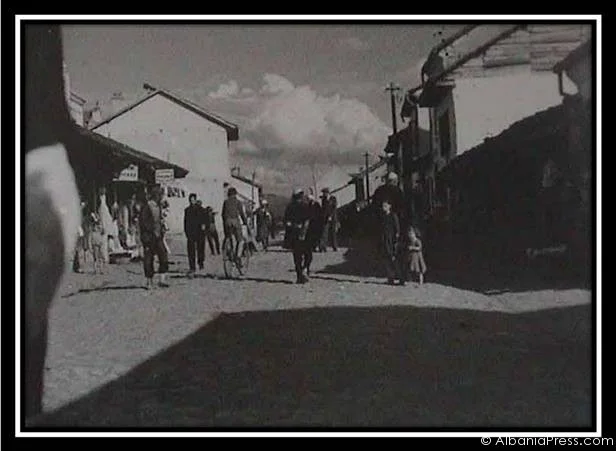
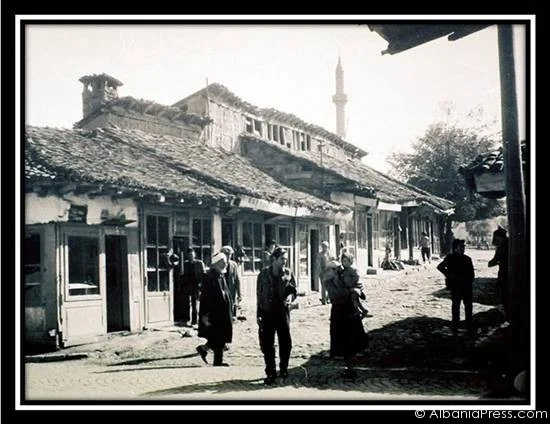
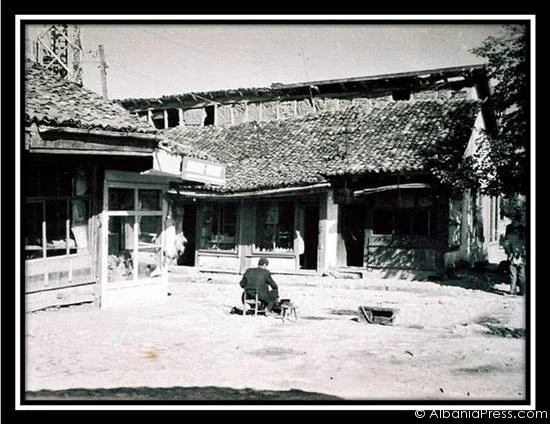
Prishtina also had an old covered bazaar. Among the public monuments in Prishtina, the building where the Kosovo Museum is now located, the building where the Kosovo Academy of Sciences and Arts is located, the Great Hamam, the Clock Tower, the Emin Gjiku Complex, etc. Among the sacred buildings, the Çarshi Mosque, the Grand Mosque, the Jashar Pasha Mosque, etc. are highlighted. In Prishtina, there is the Prishtina Tekke and the Evangelical Church. On the outskirts of Prishtina, in the village of Shkabaj, there is a small mosque, and in the village of Mazgit, there is the mosque of Sultan Murat.
11. Prishtina was greatly destroyed during the Balkan War, when Serbian forces entered the city.
Sylejman Kylqe (Turkish researcher), writes that in the telegram of March 29, 1910, an uprising of 2,000 people was organized by the people of the kazas of Prishtina and Vushtrri and they occupied the streets of Llapi and Gallapi, inviting the population to join them. The uprising was for the abolition of the otrov tax (a tax in the Ottoman administration).
In the telegram dated April 19, 1910, it is reported that before the uprising of Llap and Gallap, Jahja Efendi from Prishtina in the shop of Kafexhi Rifat hung a calendar sheet around the neck of a chicken that an Albanian was bringing to sell in the Prishtina market, demanding a tax from him. Çallak Mahmud from the Prishtina neighborhood of Ramazanij took one egg out of 8 eggs as a tax from the others, and that he lied to an Albanian to return to the village, telling him that he would be charged 9 grosh and a beard tax. This lie thus spread among the people.
After the word spread that a tax would be levied on chickens and beards, a gathering of villages was organized in the valley of the villages of Dyz, Llap and Kulinë and the war with Shefki Pasha began.
On May 21, 1910, Mahmud Shefqet Pasha, the Turkish Minister of War, arrived and began collecting weapons from the people. On May 30, 1910, after the control of the population of Vushtrri, Pristina and Drenica was carried out, the command of the special army corps prepared a detachment consisting of 8 battalions and began controlling the Llap and Gallap regions. Mahmud Shefqet Pasha announced on March 30, 1910 that the amount of weapons collected had reached 8,000 and predicted that the amount of weapons to be collected in the Pristina prefecture would exceed 15,000 weapons.
12. Pristina was occupied by the Serbs on October 12, 1912.
Pristina was occupied by the Serbs on October 12, 1912. On the way to Pristina, the Serbian army had killed and wounded 1,448 Albanians. A Danish journalist at the time reported from Skopje that 5,000 Albanians had been killed in Pristina after the city was captured.
After the capture of Pristina by the Serbian army in 1913, Archbishop Mjeda complained that 1,200 of his faithful had been forcibly converted to Orthodoxy. In May 1913, the Serbian commander of the Pristina area boasted to Belgrade that 195 Muslim Albanians had converted in Pristina.
13. In early 1913, a population census was conducted and not a single Albanian was registered in Pristina.
In early 1913, a population census was conducted and not a single Albanian was registered in Pristina. In 1915, a Russian journalist reported that half of the population was Albanian. In 1916, according to the Bulgarian census, 11,486 Albanians were registered in Pristina.
In February 1914, the Serbian government issued a decree-law on the regulation of the newly liberated regions, so for the settlement of Serbian settlers, Nikola Pashiqi bought 3,000 hectares of land near Pristina. Albanians were expelled from the colonized villages, and in addition to these, the Serbs also built new villages for Serbian settlers and named them after Serbian mythology. In the vicinity of Pristina, Çaklavica, Devet Jugoviqi, etc. were founded.
After the Second World War
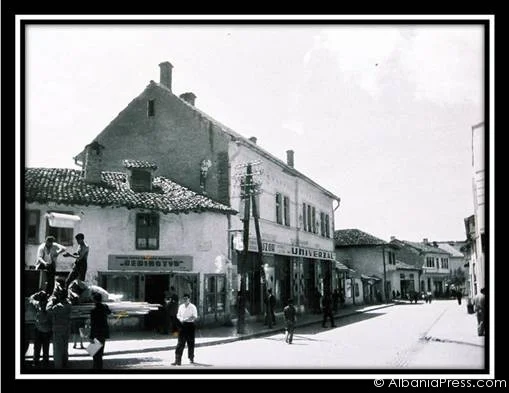
Between the two wars, there was no rapid development. Many settlers settled in Pristina and its surroundings, the Orthodox cult objects were completely appropriated, and the migration of the Albanian population to Turkey began. Facilities were built for Serbian rulers and their entertainment. Many Albanian citizen houses became the property of the colonizing Serbs. The current Union building was built in 1927, in the Western Baroque style, which was used as a hotel for the entertainment of the rulers by the military musical guard of the Kingdom of the Serbian SSR.
Like many citizens of Pristina who experienced violence at that time, in the back of this building, Albanians were tortured to death.
The Bulgarian academic Stefan Karastefanovi in his book “Kosovo” describes many details of the violence and hatred of the Serbian government towards Albanians after the Second World War, I am highlighting only two cases written in this book: Eduard Kardel, acknowledging the manifestations of Serbian nationalism after the Second World War, said in the sixties: 1. Even our party comrades were involved in the chauvinistic persecution of Albanians, their women and children. 2. Hatred towards Albanians in Pristina reached such a point that in 1992 a vile inscription “for Croats, Albanians and dogs entry is prohibited” was hung in the Grand Hotel.
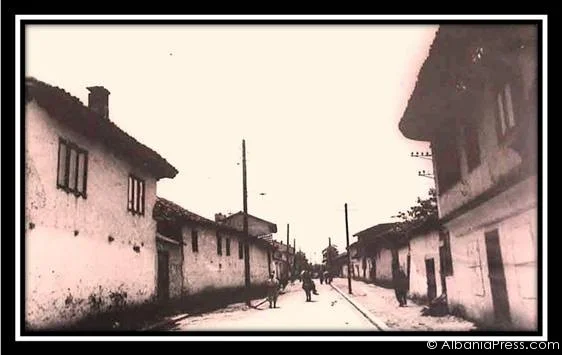
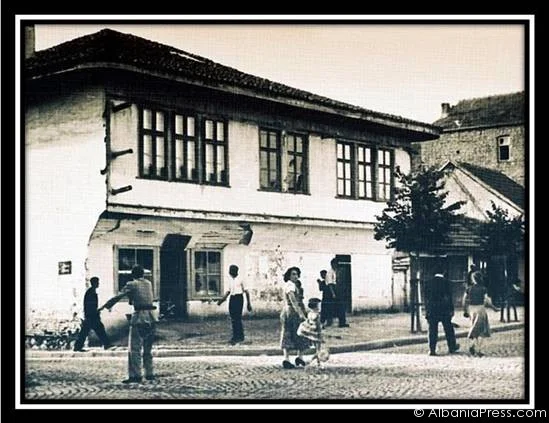
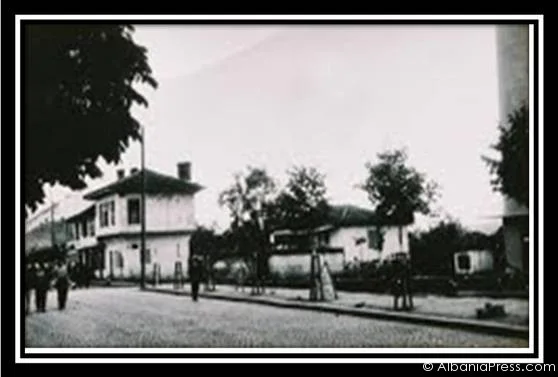
Pristina became the administrative center of Kosovo in 1947, and developed with rapid dynamics without preserving the traditional buildings of the Ottoman period. Today, Pristina as an urban city of this period has completely changed, with the exception of a few narrow streets, where a few rare buildings of architectural value from the Ottoman period have remained.
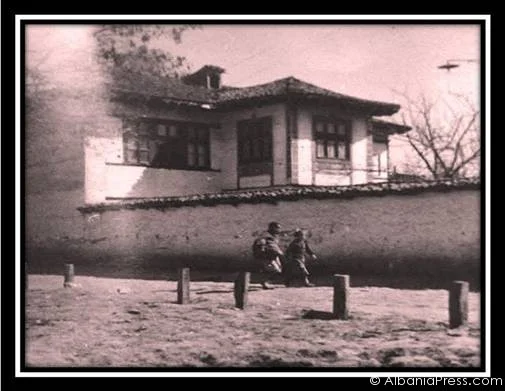
In Pristina, after World War II, the construction of institutional and urban infrastructure began, with the motto of building a city with an urban appearance. With the urban plan of the city of 1953, entire neighborhoods were demolished along with the old bazaar, destroying the Albanian folk architecture of the Turkish period. During this period, very few civic houses managed to escape the deliberate urban plans, elaborated in Belgrade.
With this plan, the Catholic Church of Pristina, the Llokaqi Mosque, the Jewish Synagogue, etc. were demolished. In place of the mosque, the Kosovo Theater was built according to the Slavic-Russian architecture and model. After World War II, in 1945, the demolition of the old city cemetery also began.
Two years after the war, the soil began to be excavated in the cemetery complex and sent by wagon to the Skopje tile factory. In 1947, a plan was drawn up to build the Pristina tile factory in this location. The workers who worked at that time remembered that they came across cemeteries during the excavations. Excavations also began under the cemetery complex at the present-day “Asim Vokshi” primary school in the city, across the stone bridge over the railway on the Pristina-Podujeva road.
14. The phase of the demolition of the Albanian cemeteries in Pristina
The phase of the demolition of the Albanian cemeteries in Pristina continued in the seventies, at the time when the new city cemetery was being built. I remember as a child we saw the bulldozers when they rolled over in the present courtyard of the cemetery, several dozen old graves with epitaphs written in the Ottoman language. There was also a very well-made grave with a heavy metal lid. From these graves, only one family managed to exhume their relatives at that time. Even during the nineties, in the abyss of the excavations of this cemetery, nearly 100 Albanian graves from the present city cemetery complex collapsed.
According to Shaip Berila, the four neighborhoods of old Pristina also had their own cemeteries. The cemeteries were above Varosh, at the chimney of the tile factory, at the Llapi Mosque… These cemeteries were leveled and these lands were given to the Serbs, but at that time no one dared to ask why this was being done – says Berila. Also, today’s city park of Pristina was a complex of cemeteries of Albanians, especially those who had been displaced from the Sandzak of Niš. Flat cemeteries have also been found in the “Field of Reconciliation”, near the well of hayrat.
In Pristina there are two localities with Jewish cemeteries, the old graves in Tauk Bahçe in the size of 10 ari, in which 800 Jews have been buried since the 1850s. In the new cemetery, 200 Jews have been buried since 1922.
The fate of the old cemeteries of Pristina was experienced by many localities and cities of Kosovo. Localities with non-Slavic material culture were colonized by settlers brought from Serbia, who built residential buildings on the cultures of the earliest civilizations and civilizations in these lands. After the occupation of Kosovo, settlers were settled throughout its territory, in the district of Pristina, in addition to the city, settlers were also settled in Gracanica.
Bërrnica, Bardhosh, where cemeteries, properties, residential houses and cult objects were appropriated. In Bërrnica, the early Albanian cemeteries were appropriated, which according to the local population belonged to Albanians, tombstones were taken, partially falsified and with them the Serbs created the myth of the Nine Jugoviçes. These stones are also published in the book by Dragan Cukiç and Milan Ivanoviç published by the Cultural Monuments Institute of the city of Pristina in 1996. The authors’ description is very doubtful, so this issue remains to be studied by eminent experts in this field. The indigenous Albanian population of the surrounding villages has preserved the data that the raja of Kolovica and Bërrnica, who had lived in these villages even during the Ottoman rule, are Albanians, from the Krasniqe tribe and fraternal with the Albanians of the villages of Makoc and Llukar.
Prishtina, after the Second World War, acquired the function of an important economic and administrative-political city, which created a solid material base. The size of the city was measured by the level of integration, the number of cadres, specialists, scientists, politicians and intellectual liberal professions.






Author: Mr. Qazim Namani
Source

