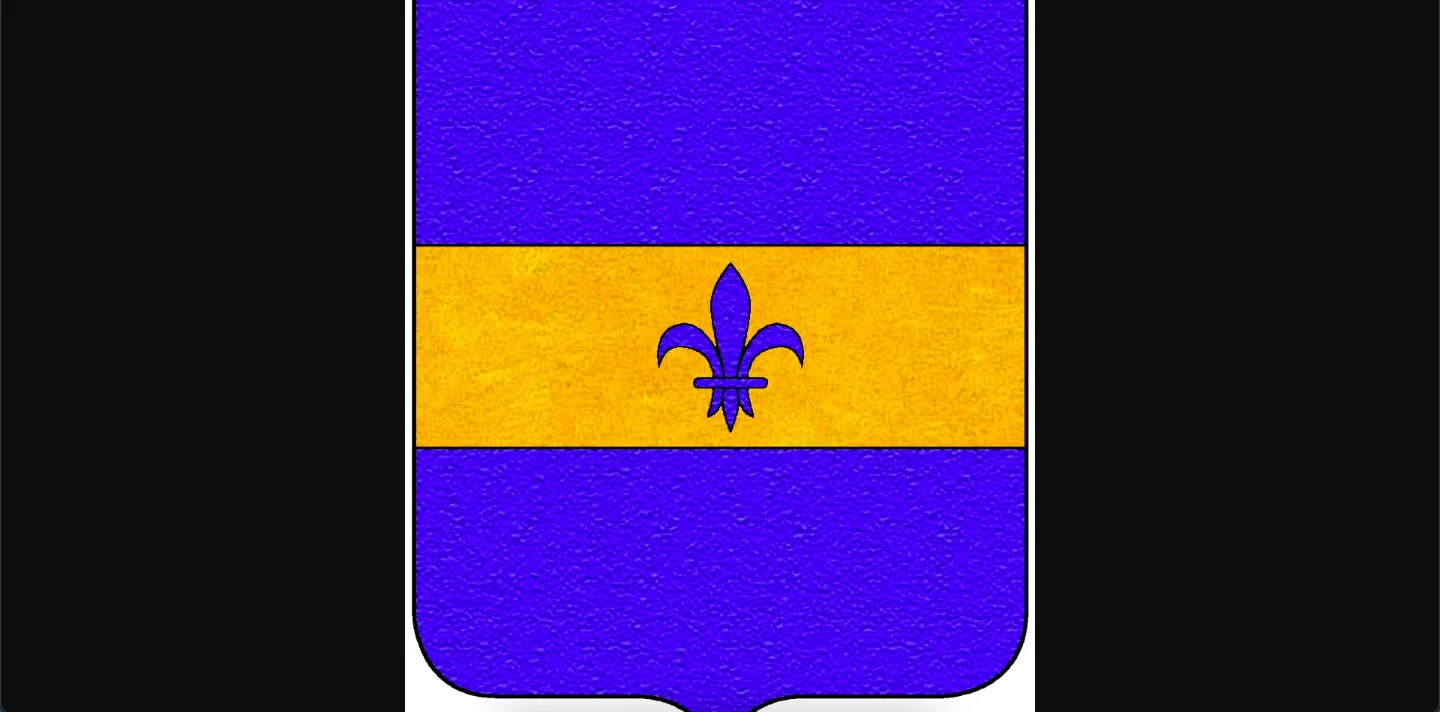

The medieval Buća family of Kotor occupies an important place in the history of the eastern Adriatic. Members of the family were wealthy merchants, diplomats, financiers and political figures who maintained close relations with the rulers of medieval Serbia. Because several members of the family served the Serbian court—most famously Nikola Buća, who became protovestiar of Emperor Stefan Dušan—the family is sometimes presented retrospectively as a Serbian family.
Yet the surviving evidence does not establish a Serbian origin. In fact, the documentary record presents a much more complicated Adriatic environment, in which Latin, Romance, Slavic and Albanian linguistic and cultural communities interacted. The safest historical conclusion is therefore that the Buća family’s later service to the Serbian rulers should not by itself be treated as proof of a Serbian ethnic origin.
The first problem concerns the family name itself. Medieval documents preserve the family in a remarkably diverse range of forms: Buchia, de Buchia, Bucchia, Bucchius, Boukija, Boućik, Bućik and Bukik. The Croatian Biographical Lexicon, which draws on archival documentation, describes Buća as a noble family of Kotor whose presence is documented from the first decade of the fourteenth century.
These forms demonstrate that the name circulated through the multilingual documentary world of medieval Kotor. Latin and Italian forms such as Buchia and Bucchia are especially important because they show that the modern form Buća cannot simply be projected backwards and treated as if it were necessarily the original medieval form.
This also raises questions concerning the often-repeated claim that the family name derives from the medieval personal name Buchius or Bucchius. That claim requires considerably more documentation than is sometimes provided.
The frequently repeated statement that the first Bučić recorded in Kotor was a Jakov Bučić in 1186 likewise needs to be checked against the original archival record before it can be used as established evidence. In historical writing, an assertion appearing in a modern secondary source is not equivalent to an independently verified medieval document. The archival evidence that is securely documented places the Buća family in Kotor from the beginning of the fourteenth century.
Nor does the name Bucchia itself constitute evidence of Serbian origin. The medieval forms are not straightforwardly identifiable as an originally Serbian ethnonym or as an exclusively Slavic family name. Indeed, the Latin and Italian documentary forms reflect the linguistic environment of Kotor, a city deeply connected to the wider Dalmatian and Adriatic world.
Kotor’s political affiliations changed repeatedly, while its urban society remained connected to different linguistic and commercial networks. Consequently, the fact that the family later became integrated into the political structures of the Serbian state does not establish that its ancestors were ethnically Serbian.
The career of Nikola Buća illustrates precisely why political allegiance and ethnic origin need to be distinguished. Nikola, the son of the Kotor nobleman Petar, is documented from 1323 onward and became a major financial official of Stefan Dušan.
He leased Serbian customs revenues, participated in diplomatic negotiations and eventually served as Dušan’s protovestiar. He was therefore unquestionably an important figure in the Serbian imperial administration. Yet the same source identifies him specifically as a Kotor nobleman, and his family was deeply involved in the commercial and civic life of Kotor.
A Kotor patrician could serve a Serbian ruler without this necessarily transforming the family’s earlier linguistic or ethnic background. Medieval Adriatic elites frequently operated across political borders. Their commercial networks, marriages, properties and political loyalties could extend from Kotor to Dubrovnik, Serbia, Bosnia, Venice and other centres. The Buća family’s later participation in the Serbian state is therefore an important part of its history, but it should not be confused with evidence that the family originated as a Serbian ethnic group.
There is also significant evidence for an Albanian presence in and around the wider Kotor region during the medieval period. Konstantin Jireček’s research into the medieval Adriatic documents identified an occurrence of the expression lingua albanesesca in a Ragusan judicial record from 1285, as well as references to an Albanensis. The record concerns a witness who reported hearing a voice speaking “in the Albanian language.”
Buçja
The names found in later Kotor material make the question even more interesting. A study discussing Jireček’s research points to a 1351 Kotor record mentioning Mihalo Bucia, alongside a person named Brut Bishti. The same discussion refers to a later list of Kotor families containing names such as Gini, Bisti, Barte, Zaguri and Bucchia, which have been compared with Albanian forms such as Gjini, Bishti, Bardhi, Zaguri and Buçja.
The possible relationship between Bucchia (Bucia) and the Albanian Buçja is particularly interesting. It provides a possible Albanian linguistic interpretation of the name, especially when considered alongside the other names occurring in the same regional material. But this point should not be overstated.
Nevertheless, what can be said with greater confidence is that there is no straightforward linguistic basis for declaring Bucchia/Buchia an originally Serbian family name. The archival forms are overwhelmingly recorded through Latin and Romance documentary conventions, while the possibility of an Albanian connection deserves investigation rather than dismissal. The appearance of Bucia/Bucchia alongside demonstrably Albanian-associated names in Kotor material strengthens the case for considering an Albanian connection as one historical hypothesis.
The broader demographic evidence also fits the picture of a highly mixed medieval Kotor. Albanian names and toponyms appear in the surrounding territory, including forms such as Gjin, Bardonja, Qafa, Gjegjeza, Balloçi, Gropa, Suka and others. The survival of Albanian-derived place-names is particularly significant because toponyms can preserve evidence of earlier linguistic communities even after the language of the inhabitants changes.
The strongest historical formulation is therefore that the evidence does not establish an exclusively Serbian origin.
The name’s medieval forms—Buchia, de Buchia, Bucchia, Bucchius, Boukija, Bućik and related variants—do not have Slavic or Serbian origin Meanwhile, the documented presence of Albanian speakers and Albanian-associated names in the Kotor region provides an important historical context for investigating whether Bucia-Bucchia may have had an Albanian linguistic background.
In short, the historical record supports describing the Buća as a Kotor patrician family deeply embedded in the multilingual society of the medieval Adriatic. Their later and very significant connection with the Serbian court is beyond serious doubt, but that political connection is not itself proof of Serbian ethnic ancestry.
Sources
Jireček, Konstantin. Die Romanen in den Städten Dalmatiens während des Mittelalters. Vienna: Kaiserliche Akademie der Wissenschaften, 1904.
Jireček, Konstantin. Geschichte der Serben. Vol. 2. Gotha: Friedrich Andreas Perthes, 1911.
Leksikografski zavod Miroslav Krleža. “Buća.” Hrvatski biografski leksikon. Zagreb.
Leksikografski zavod Miroslav Krleža. “Buća, Nikola.” Hrvatski biografski leksikon. Zagreb.
Vežić, Pavuša. “Ciboria of the Early Middle Ages in Kotor.” Prilozi povijesti umjetnosti u Dalmaciji 39, no. 1 (2005).
Krasić, Stjepan. “Nekadašnji dominikanski samostan Sv. Nikole u Kotoru (1266–1807).” Prilozi povijesti umjetnosti u Dalmaciji 28, no. 1 (1989): 129–141.

