
by Elton Ligu
A collection of quotes about this beautiful Albanian dress from various authors in their works, published in the 19th and 20th centuries
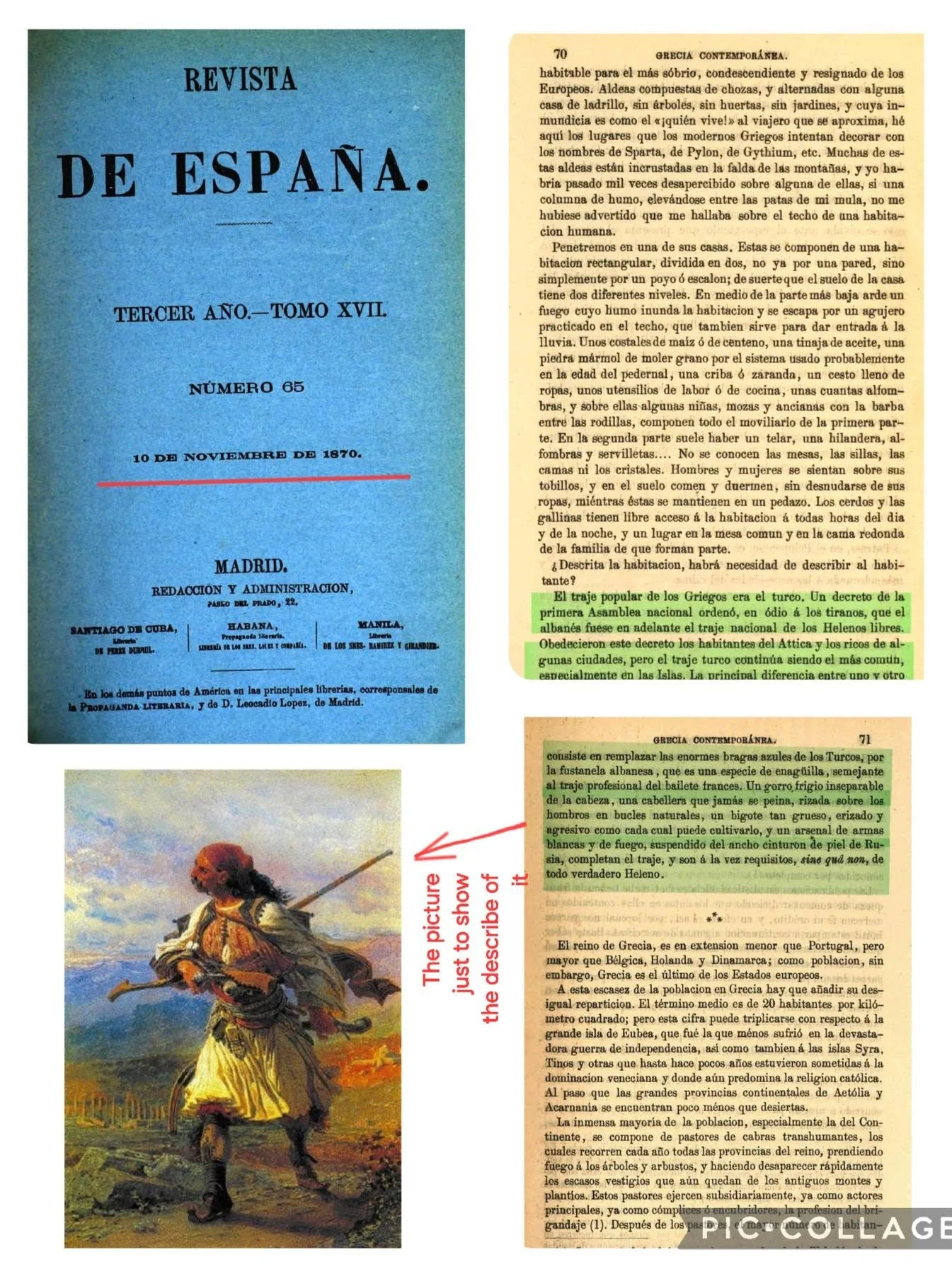
1) Magazine of Spain, from the year 1870
The popular costume of the Greeks was Turkish. A decree of the First National Assembly ordered, in hatred of the tyrants, that henceforth the Albanian one should be the national costume of the free Hellenes. The inhabitants of Attica and the wealthy of some cities obeyed this decree, but the Turkish costume continues to be the most common, especially on the islands.
The main difference between the one and the other lies in the replacement of the giant blue trousers of the Turks with the Albanian frock coat, which is a kind of cloak, similar to the French professional dance costume.
A Phrygian hat inseparable from the head, hair that is never combed, curled over the shoulders in natural ringlets, a mustache as thick, strong and aggressive as anyone can grow it, and an arsenal of firearms and knives, depending on the width of the Russian leather belt, complete the costume and are at the same time the requirements of every true Hellene.
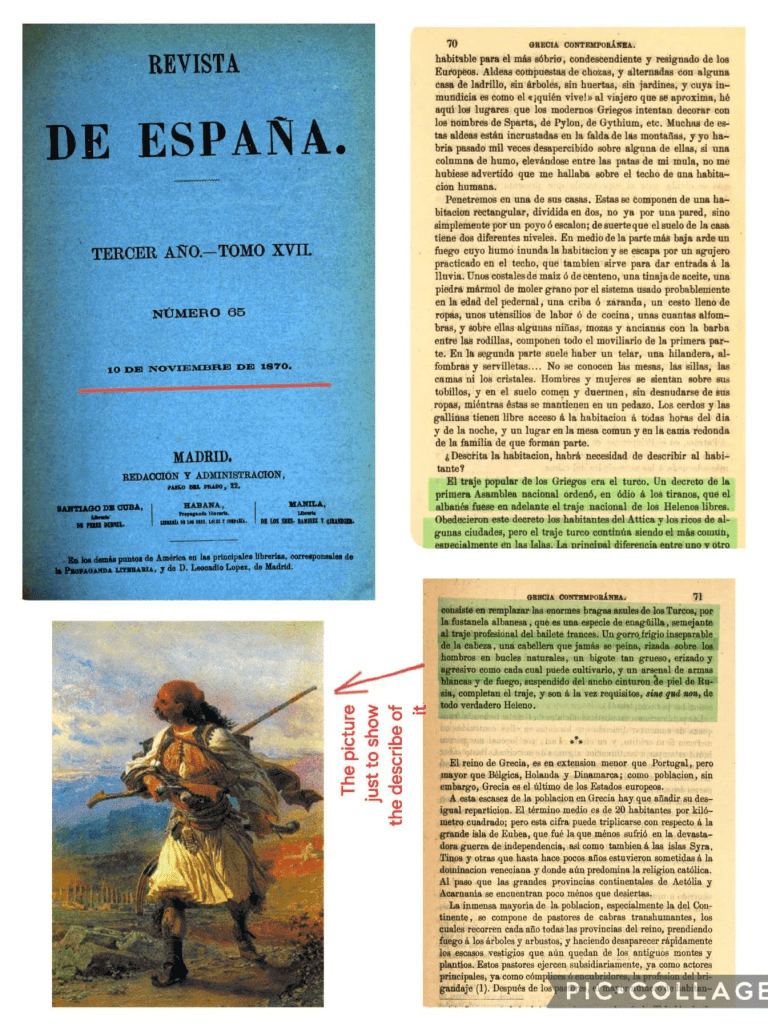
2) ARIZONA REPUBLICAN Newspaper Monday Morning 10/11/1913
The Evzoni, the Greek highland troops, who have been in the news recently, owe their distinctive costume to the Albanians of the south. The Albanians of Greece wore a dress very similar to that of their kings of southern Albania, the tosca, the most striking feature of which is the Fustanella or dress, and it was not unnatural for the Greek kingdom when the kingdom was established after the war of independence, which was the costume of the Albanian natives “around the capital”, and should be adopted as national dress.
King Otho, the first monarch of the new state, wore the Fustanella, and although it has now been abandoned by the upper classes, it still remains the uniform of the Evzones, although they are certainly not an Albanian force.

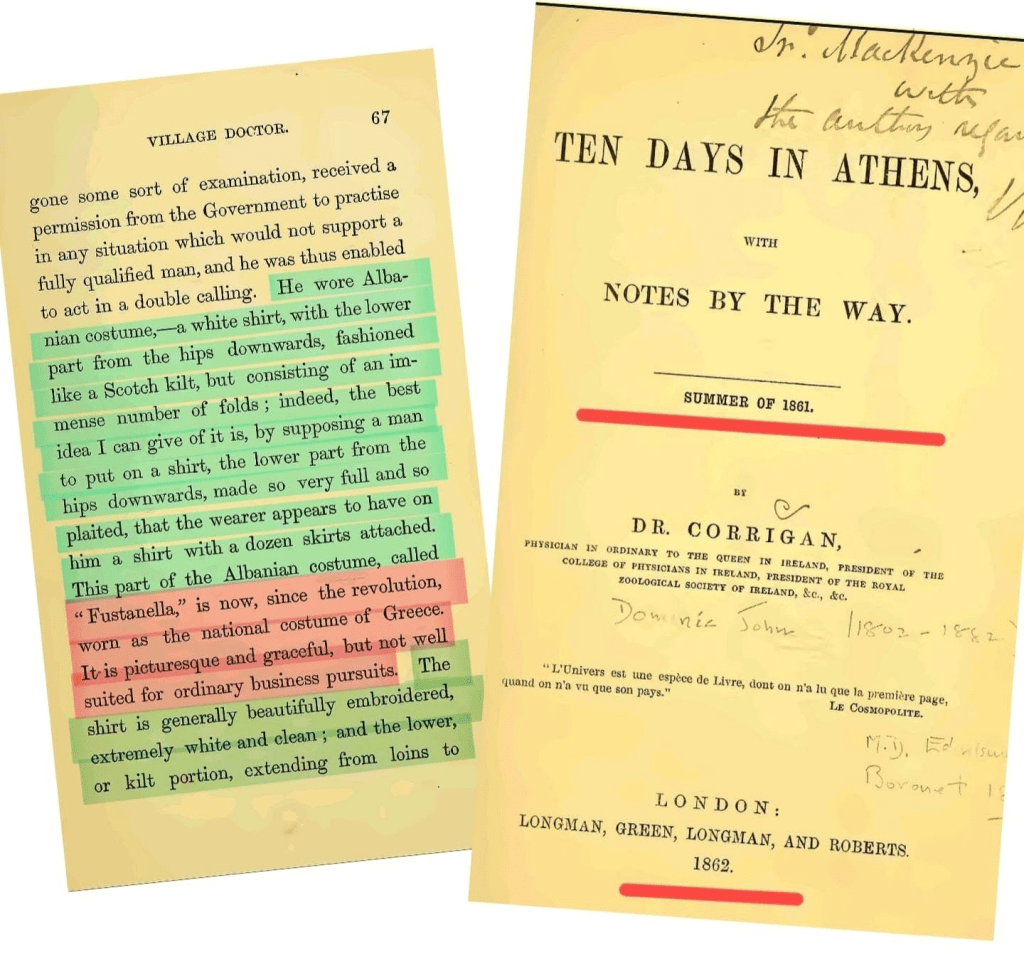
3) Ten Days in Athens Dr. Corrigan 1862
He wore an Albanian costume, a white shirt, with the lower part from the hips down, modeled like a Scottish dress, but consisting of a great number of pleats; indeed, the best idea I can give of it is, supposing a man to wear a shirt, the lower part from the hips down, made so much filled and so pleated, that the wearer appears to have on a shirt with a dozen skirts attached to it. This part of the Albanian costume, called the Fustanella, has now since the revolution been worn as the national costume of Greece. It is picturesque and pleasant, but not suitable for ordinary business activities. The shirt is generally beautifully embroidered, exceptionally white and clean; and the lower part, or part of the dress, extending from the hips to….
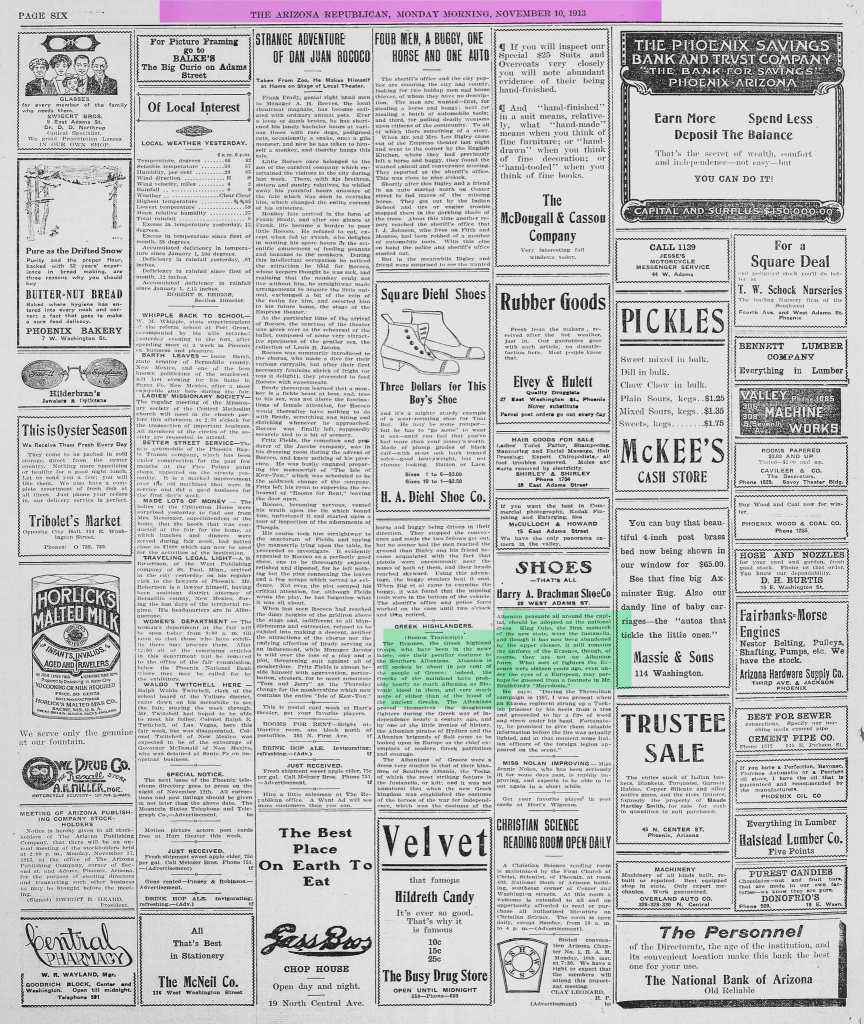
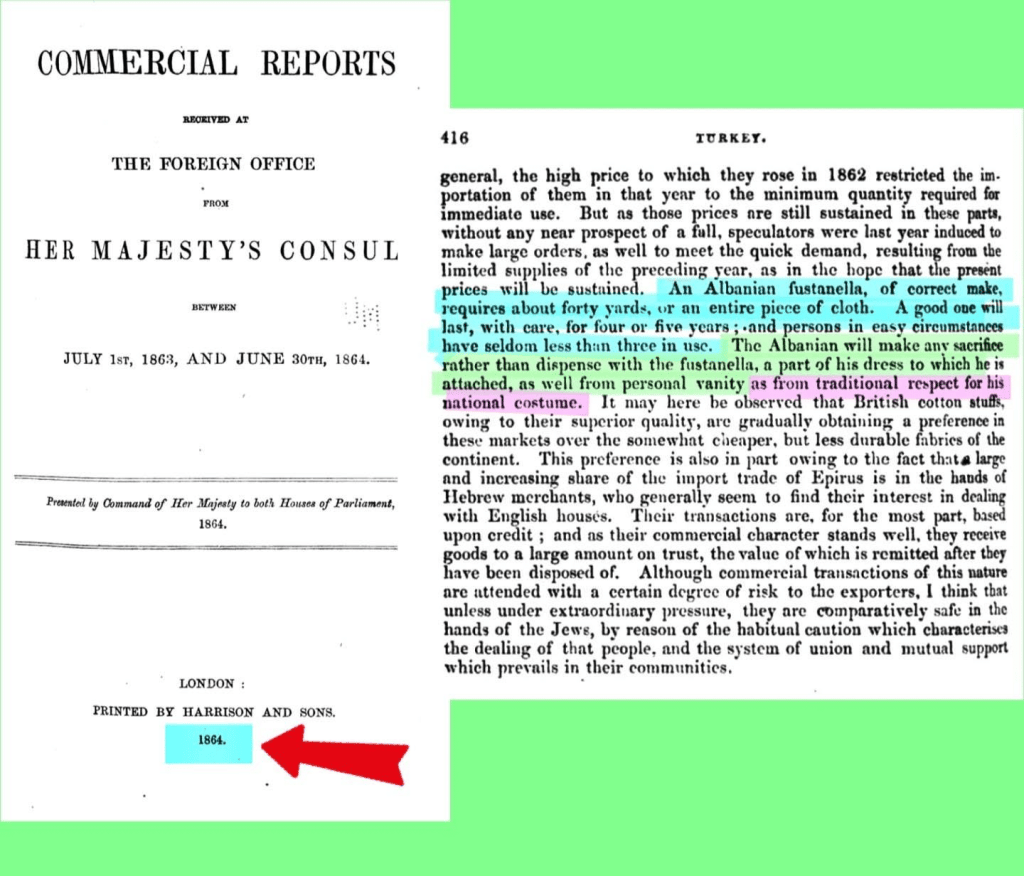
4) “Trade Relations from the Foreign Office by His Majesty the Consul” year 1863
An Albanian frock, of proper manufacture, requires about forty yards, a whole piece of cloth, and a good one will last, if carefully preserved, four or five years; whereas persons in good circumstances seldom have less than three in use. The Albanian will make every possible sacrifice rather than give up the frock, a part of the dress to which he is attached, as well as his personal vanity and the traditional respect for his national costume.
1864
Albanian Tosk man in Fustanella


