
Abstract
The history of Greek warfare contains numerous episodes in which civilian populations were subjected to massacres, expulsions, destruction of settlements, and other forms of collective violence. These episodes occurred in very different historical contexts, ranging from warfare in the ancient Greek world to the Greek War of Independence, the nationalist conflicts in Macedonia and Crete, and the Greek military occupation of western Anatolia between 1919 and 1922. The character, scale, and political meaning of these episodes varied considerably, and they should not be treated as a single continuous phenomenon. Nevertheless, examining them together reveals recurring relationships between warfare, nationalism, religious identity, territorial expansion, and the treatment of populations regarded as belonging to opposing communities.
The Greek War of Independence was particularly important in the development of the modern Eastern Question. It became a testing ground for nationalism, imperial intervention, Orientalism, humanitarian politics, media propaganda, philhellenism, and competing European interpretations of the Ottoman world. Contemporary and later sources describe extensive atrocities committed by both Greek and Ottoman forces during the conflict, including massacres of Muslim populations in areas conquered by Greek forces. Later episodes in Macedonia, Crete, and Anatolia similarly involved violence against civilians and competing accusations between Greek, Turkish, Bulgarian, Serbian, Armenian, and other nationalist movements.
The purpose of this article is not to portray Greeks as inherently violent, nor to deny crimes committed by other actors. Rather, it examines documented and reported instances of violence associated with Greek military and Megali-nationalist movements and considers the ideological and political circumstances in which such violence occurred. Particular attention is given to the destruction of Muslim communities during the Greek War of Independence and to atrocities attributed to Greek forces during the occupation of western Anatolia and their retreat during the Greco-Turkish War of 1919–1922. The article also considers the distinction between ancient Greek warfare and the conduct of the modern Greek state, since similarities in cultural identity cannot establish institutional continuity.
Introduction: war, nationalism, and the Eastern Question
The history of modern Greece emerged within one of the most violent political transformations of nineteenth-century Europe. The Greek War of Independence was not merely a peripheral rebellion against Ottoman rule. It became deeply connected with the wider struggle over the so-called Eastern Question: the question of how the territories and peoples of the weakening Ottoman Empire would be reorganized and controlled.
The revolution consequently attracted an extraordinary degree of foreign political, military, intellectual, and humanitarian involvement. Nationalism, imperial rivalry, Romantic philhellenism, Orientalism, religious solidarity, humanitarian intervention, and the interests of the European powers all interacted within the conflict. William St Clair’s study of the philhellenes demonstrates the importance of the international movement supporting the Greek cause, while more recent scholarship has situated the Greek Revolution within the larger history of the Eastern Question and European intervention in the Ottoman Empire. Ozan Ozavci, for example, examines the revolution as an important moment in the development of international perceptions and policies toward the Ottoman Empire. (St Clair, 2008; Ozavci, 2023)
The Greek Revolution thus became a testing ground for ideas that would shape nineteenth-century politics: nationalism, imperialism, humanitarian intervention, Orientalism, Romanticism, and the political mobilization of public opinion. It also demonstrated the tensions inherent in European support for national liberation movements when those movements operated in territories inhabited by populations of different religions and communal identities.
Mass violence occurred from the opening stages of the uprising. Greek revolutionary forces carried out massacres of Muslim and Jewish civilians in territories they conquered, while Ottoman forces simultaneously committed severe atrocities against Greek Christian populations. The two realities should not be placed in competition with one another. They formed part of the same violent process.
Ancient Greek warfare and the treatment of conquered populations
The history of violence associated with Greek warfare reaches much further back than the creation of the modern Greek state. Ancient Greek warfare could involve the destruction of defeated communities, enslavement, deportation, and the killing of noncombatants.
Ancient Greek atrocities
David Konstan’s study “Anger, Hatred, and Genocide in Ancient Greece,” published in Common Knowledge in 2007, examines ancient Greek attitudes toward the mass slaughter of noncombatant populations. Konstan emphasizes the brutality that could characterize Greek warfare and the frankness with which ancient authors sometimes discussed or justified the destruction of conquered populations. His purpose is to contrast ancient Greek attitudes toward mass killing with modern assumptions about classical Greece as the historical source of civilized political and moral values. (Konstan, 2007)
The ancient world, of course, cannot simply be judged according to modern international humanitarian law. The modern legal distinction between combatants and civilians did not exist in its present form. Nevertheless, ancient warfare demonstrates that the destruction of entire communities was not regarded as inherently incompatible with Greek political and military culture.
A conquered city could be destroyed, its inhabitants killed or enslaved, and its territory redistributed. Collective punishment could be regarded as a legitimate instrument of warfare.
This does not establish a direct institutional or ideological continuity between ancient Greek warfare and the modern Greek state. It does, however, challenge romanticized representations of ancient Greece as a uniformly peaceful or humanitarian civilization.
Ancient Greek warfare also demonstrates how violence could be morally justified through religious, political, and civilizational language. Greek warfare against Persia, for example, was subsequently represented through narratives of freedom, justice, and civilization, while material motives such as booty and territorial expansion also formed part of ancient warfare.
The Greek War of Independence
The Greek uprising against Ottoman rule began in 1821 and rapidly developed into a conflict characterized by massacres, reprisals, population displacement, and the destruction of settlements.
Greek revolutionary forces did not fight Ottoman armies alone. The conflict also became a struggle involving religious and communal populations. Muslims, Christians, and Jews could become targets depending on military and political circumstances.
Tripolitsa Massacre of 1821
One of the most consequential developments was the destruction of Muslim communities in areas conquered by the Greek revolutionaries. The capture of Tripolitsa in September 1821 became one of the most notorious episodes of the revolution. Following the city’s fall, thousands of Muslim inhabitants were massacred, while other Muslim communities were similarly destroyed or expelled during the revolutionary conquest of the Peloponnese.
Recent scholarship has revisited the Tripolitsa massacre in detail. Aristides N. Hatzis has examined the moral arguments subsequently used to rationalize the massacre and the ways in which the victims were represented in later historical narratives. William St Clair likewise documents the extreme violence accompanying the revolutionary conquest and the destruction of Muslim and Jewish communities. (Hatzis, 2023; St Clair, 2008)
Ozan Ozavci’s research places these massacres within the broader transformation of the Ottoman political order. The disappearance of Muslim and Jewish communities from much of the Peloponnese was not merely a temporary consequence of military operations. It represented a profound demographic transformation accompanying the emergence of the Greek state. (Ozavci, 2023)
At the same time, Ottoman authorities and Muslim forces committed severe atrocities against Greek Christians. The massacre of Christians on Chios in 1822 became one of the most famous examples and generated enormous sympathy for the Greek cause in Western Europe.
The existence of Greek atrocities therefore does not negate Ottoman atrocities. Conversely, Ottoman massacres cannot be used to erase the destruction of Muslim communities by Greek revolutionary forces.
Massacres and the formation of the Greek national state
The emergence of the Greek kingdom demonstrates how population violence and nation-building could become interconnected.
The revolutionary period witnessed the destruction of many Muslim settlements and the disappearance of much of the Muslim population from territories that subsequently became part of the Greek state. Independence was therefore not simply a transfer of sovereignty from one government to another. It was accompanied by a profound transformation in the demographic composition of the territory.
This development was closely connected with the changing political meaning of nationality. Nineteenth-century nationalism increasingly associated political legitimacy with the idea that a territory should belong to a particular national people. In territories containing populations divided by religion, language, and communal identity, the application of this principle could create pressure for demographic homogenization.
The Greek case illustrates this process particularly clearly. A territory that had previously contained substantial Muslim and Jewish communities emerged from revolutionary warfare as a predominantly Christian national state.
This transformation subsequently became incorporated into national historical memory. The violent process through which demographic realities were changed could disappear behind the language of liberation and national restoration.
The issue is particularly important in the context of the Eastern Question. European observers often interpreted Ottoman Christian populations through the language of “national liberation”, while the Muslim populations living in the same territories received considerably less attention in European philhellenic narratives.
Crete and violence against Muslim populations
Crete became another major arena of Greek-Ottoman conflict during the nineteenth century. Repeated Christian revolts against Ottoman rule were accompanied by violence against Muslim inhabitants. The political question of Crete was increasingly framed around union with Greece, while the Muslim population increasingly found itself caught between competing national projects.
Contemporary Ottoman political discourse repeatedly raised allegations of atrocities against the Muslim population of Crete. A nineteenth-century Austrian political chronicle, for example, recorded Ottoman concerns about continuing atrocities against the Muslim population and called upon the Great Powers to intervene. Such a source should be read as evidence of contemporary political discourse rather than as independent proof of every allegation it reported.
The history of Crete nevertheless demonstrates the increasingly unstable relationship between nationalism and mixed religious populations in the late Ottoman period.
As the idea of national sovereignty expanded, coexistence between Christian and Muslim communities became increasingly vulnerable. Territorial claims were expressed through national and religious identities, while communal violence could alter demographic realities and strengthen competing territorial claims.
Macedonia and the era of the Komitadjis (paramilitaries)
At the turn of the twentieth century, Macedonia became one of the most complex and violent regions of southeastern Europe. Greek, Bulgarian, Serbian, and Romanian nationalist organizations competed for influence among a population divided by language, religion, local identity, and political allegiance. Armed bands, commonly described as komitadjis, operated throughout the region.
The conflict was not simply a conventional war between states. Villages and civilian communities became major targets of competing nationalist organizations. Armed groups attempted to force inhabitants to support particular national causes, while rival organizations retaliated against suspected supporters of their opponents.
Contemporary accounts describe Macedonia as a landscape in which Bulgarian, Greek, Serbian, and Romanian armed groups accused one another of atrocities against elderly people, women, and children. Villages were burned, civilians were killed, and communities were subjected to intimidation.
One contemporary account describes Macedonia as being filled with competing Bulgarian, Greek, Serbian, and Romanian armed bands and portrays the conflict as a cycle in which rival Christian nationalist organizations attacked the adherents of opposing movements. Another contemporary publication reported that atrocities attributed to Greek bands in Macedonia prompted reprisals against Greek communities in Bulgaria.
These sources should not be treated as neutral statistical surveys of the conflict. They nevertheless provide evidence that Greek armed organizations participated in the violence and that contemporary observers understood the Macedonian conflict as a multi-sided struggle involving atrocities against civilians.
The Macedonian case therefore cannot be reduced to a simple Greek-versus-Turkish conflict. It was a multi-sided nationalist struggle in which several movements attempted to transform a linguistically, religiously, and culturally mixed population into populations identified with competing national projects.
The Megali Idea and Greek territorial expansion
The ideological background to later Greek expansion was the Megali Idea, or “Great Idea”. From the establishment of the Greek kingdom in 1830, sections of the Greek political establishment promoted the concept that territories containing Greek populations, or territories regarded as historically Greek, should eventually be incorporated into a larger Greek state.
The historical legitimacy of this imperialist and irredentist idea was presented through references to ancient Greece, Byzantium, Orthodox Christianity, and the historical continuity of Hellenism. Even though many of said regions were polycentric and multi-ethnic, consisting of many other ethnic groups.
The political consequences were significant. The borders of the Greek kingdom were increasingly regarded by some political movements as provisional rather than final. Territorial expansion therefore remained an important element of Greek political thought for much of the nineteenth and early twentieth centuries. This ideology reached its most dramatic expression after the First World War.
The Greek occupation of Smyrna and Western Anatolia
The defeat of the Ottoman Empire in the First World War created a new opportunity for territorial expansion. On 15 May 1919, Greek troops landed at Smyrna, present-day İzmir, under Allied protection. The occupation was presented by the Entente powers in the context of the postwar settlement and the protection of local Christian populations.
For Greek nationalism, however, the occupation represented something considerably larger: an opportunity to realize part of the Megali Idea. Greek military forces subsequently expanded their control over large areas of western Anatolia. During 1920 they advanced toward Bursa, Balıkesir, Uşak, Alaşehir, and Nazilli.
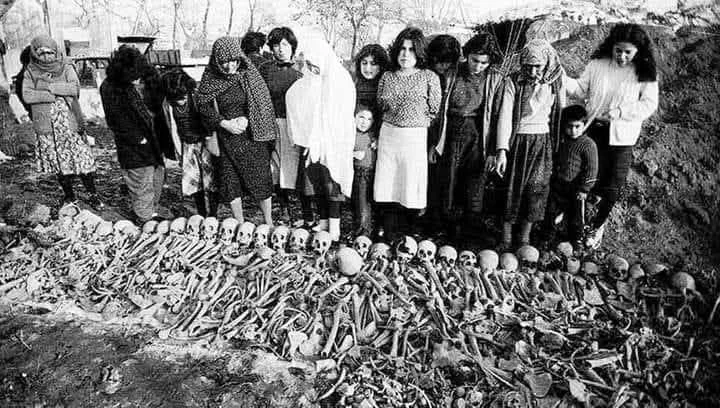
The occupation rapidly produced violence between Greek forces and Muslim inhabitants. Contemporary Allied and diplomatic sources recorded allegations of abuses by Greek troops and irregular forces against Muslim civilians. The Turkish nationalist movement also made extensive use of reports of Greek atrocities as part of its political mobilization.
M. Murat Hatipoğlu’s study of the Turkish War of Liberation argues that Greek forces committed massacres in their occupation zones and emphasizes archival evidence concerning violence against the Muslim population. Hatipoğlu’s interpretation is explicitly sympathetic to the Kemalist movement and should therefore be distinguished from the underlying documentary evidence. His article nevertheless provides extensive references to archival material concerning the Greek occupation. (Hatipoğlu)
Italian sources provide another important body of evidence. Mevlüt Çelebi’s study of Italian sources concerning Greek atrocities in Anatolia examines Italian military, diplomatic, and other contemporary observations concerning killings, mistreatment, destruction, and other abuses during the occupation. (Çelebi)
These sources are important because they demonstrate that allegations of Greek atrocities were not confined to later Turkish nationalist historiography.
The Turkish national movement and the Greek occupation
The Greek advance contributed to the consolidation of the Turkish nationalist movement led by Mustafa Kemal. Following the Allied occupation of Istanbul on 16 March 1920 and the dissolution of the Ottoman parliament, the nationalist movement established its political center in Ankara. The Grand National Assembly opened on 23 April 1920.
The Treaty of Sèvres, signed on 10 August 1920, envisaged a drastic restructuring of Ottoman territories. Greek control over western Anatolia formed part of this wider postwar settlement. For Turkish nationalists, the Greek occupation therefore became inseparable from the struggle for national sovereignty.
Reports of violence against Muslim inhabitants became important political instruments. They contributed to the argument that the Greek military presence threatened the survival of the local Muslim population and that armed resistance was therefore necessary.
The Greek advance should consequently be understood not only as a military operation but also as a factor in the consolidation of Turkish nationalism.
The Greek offensive toward Ankara
The conflict escalated in 1921 when Greek forces advanced deep into Anatolia. The objective was to defeat the Kemalist forces before they could consolidate control over the interior. Greek forces advanced toward Ankara, but their offensive was halted at the Battle of Sakarya in August–September 1921.
Contemporary and later accounts describe atrocities against Turkish civilians during the Greek advance. The modern historical literature also records extensive destruction and population displacement during the fighting.
The Greek offensive was ultimately unsuccessful. The Battle of Sakarya marked a major turning point, after which the Greek army gradually lost the strategic initiative. The subsequent withdrawal created another phase of extreme violence.
The Greek retreat and scorched-earth destruction
The Greek withdrawal from Anatolia in 1922 produced widespread destruction. Historical studies of the conflict describe Greek forces destroying settlements during their retreat, including the burning of villages and the destruction of property. The violence affected Muslim and Christian civilians alike.
The retreat was accompanied by a large movement of Greek Christian refugees toward the Aegean coast and Smyrna. These civilians faced the advancing Turkish nationalist forces as well as the chaos created by the collapsing Greek military occupation.
A contemporary British parliamentary debate in August 1922 discussed allegations of Greek atrocities in Asia Minor and referred to the investigations of Arnold J. Toynbee. Toynbee had personally investigated conditions in the region and reported on atrocities committed during the conflict. The British parliamentary record is significant because it demonstrates that allegations of Greek atrocities were being discussed internationally while the conflict was still underway.
Contemporary accounts also contain testimony from Greek refugees who reportedly blamed Greek military commanders or local ecclesiastical authorities for orders associated with the destruction of villages.
Such testimony must be treated as individual testimony rather than as a comprehensive statistical investigation. Nevertheless, it demonstrates that Greek civilians themselves could become victims of policies pursued by Greek military authorities.
Smyrna and the end of the war
The collapse of the Greek military position culminated in the Turkish recapture of Smyrna in September 1922.
The subsequent destruction and mass displacement of the city’s population became one of the most traumatic episodes of the entire conflict. Greek and Armenian civilians suffered mass violence, while the advancing Turkish forces and the collapse of governmental authority produced a catastrophic humanitarian situation.
These events must therefore be studied as part of a larger cycle of violence affecting Muslims and Christians alike.
Greek atrocities against Muslim civilians cannot be used to erase the suffering of Greek and Armenian civilians in 1922. Conversely, the suffering of Greek and Armenian populations cannot be used to erase documented or reported atrocities against Muslim civilians during the Greek occupation.
The demographic consequences were enormous. The Greco-Turkish War and the subsequent population exchange transformed the demographic structure of both Anatolia and Greece.
Eastern Thrace and the Greek Occupation
The Greek occupation of Eastern Thrace constitutes another important part of the history of violence between 1919 and 1922. Greek forces occupied large portions of Thrace after the First World War, and the occupation produced conflict with the local Muslim population. Turkish historical scholarship has documented killings, expulsions, destruction of property, and other forms of violence during the occupation.
Türkmen Töreli’s study of the Greek occupation of Thrace examines archival material concerning violence against the Muslim population between 1919 and 1922. More recent research has likewise examined events in Edirne and surrounding districts.
The Thracian case demonstrates that the violence associated with Greek expansion was not confined to western Anatolia. Both sides increasingly regarded territorial control and demographic composition as interconnected questions.
Conclusion
The history of Greek warfare contains a long and complex record of violence against civilian populations. From ancient Greek warfare and the destruction of conquered communities to the massacres associated with the Greek War of Independence, the violence surrounding nationalist struggles in Crete and Macedonia, and the Greek occupation of western Anatolia between 1919 and 1922, civilian populations repeatedly became targets or victims of Greek military and political projects.
The Greek War of Independence was particularly important because it demonstrated how nationalism, religious identity, foreign intervention, and demographic transformation could become intertwined. The destruction of Muslim and Jewish communities in territories conquered by Greek revolutionaries contributed to the formation of the demographic landscape of the modern Greek state, just as later conflicts contributed to the creation of increasingly homogeneous national territories elsewhere in the Balkans and Anatolia.
The events of 1919–1922 provide another important example of the relationship between territorial expansion and civilian violence. The Greek occupation of Smyrna and western Anatolia was connected to the Megali Idea and to the postwar partition of the Ottoman Empire. Contemporary and later sources report atrocities against Muslim civilians during the occupation, while the subsequent Turkish victory produced its own enormous humanitarian catastrophe for Greek and Armenian populations.
The historical lesson is not that one population possessed an inherent tendency toward violence. Rather, the evidence demonstrates how nationalism, territorial ambition, religious polarization, military occupation, and the collapse of political authority could produce extreme violence against civilians.
The study of Greek atrocities is important precisely because national history should not be exempt from the same critical standards applied to the histories of other peoples. The destruction of Muslim communities during Greek expansion, the violence of nationalist bands in Macedonia, the treatment of Muslim civilians in occupied Anatolia, and the destruction associated with the Greek retreat all belong to the historical record and deserve examination alongside the atrocities suffered by Greeks and other Christian populations.
Only by examining all sides of these conflicts can the history of the Eastern Mediterranean be understood without allowing national memory to determine in advance who may be remembered as a victim and who may be remembered as a perpetrator.
Sources
Çelebi, Mevlüt. “Italian Sources on Greek Atrocities in Anatolia (1919–1922).” Turkish Academy of Sciences.
Güçlü, Yücel. “The Greek Occupation of Western Anatolia and the Jews, 1919–1922.” In Morean Massacre and Greek Atrocities in Anatolia Symposium Proceedings. Ankara: Türk Tarih Kurumu, 2024, pp. 689–733.
Hansard. “Greeks in Asia Minor.” House of Lords, 1 August 1922.
Hatzis, Aristides N. “The Absolute Barbarians as Victims: Moral Blame, Historical Disappointment and Orientalist Double Standards in Rationalizing the Tripolitsa Massacre.” 2023.
Hatipoğlu, M. Murat. “A Humanitarian Gesture by the Kemalist Government towards the Christian Population during the Turkish War of Liberation in Anatolia.” Atatürk Araştırma Merkezi Dergisi.
Konstan, David. “Anger, Hatred, and Genocide in Ancient Greece.” Common Knowledge 13, no. 1 (2007): 170–187.
Kudryavtseva, E. P. “The Greek Revolution of 1821 and Russian Policy in the Eastern Question.” MGIMO Review of International Relations 14, no. 1 (2021): 31–47.
Ozavci, Ozan. “The Ottoman Imperial Gaze: The Greek Revolution of 1821–1832 and a New History of the Eastern Question.” Journal of Modern European History 21, no. 2 (2023): 222–237.
St Clair, William. That Greece Might Still Be Free: The Philhellenes in the War of Independence. Cambridge: Open Book Publishers, 2008.
Töreli, Türkmen. “Trakya’nın İşgali ve Yunan Mezalimi (1919–1922).” Tarih Araştırmaları Dergisi 31, no. 51 (2012).
Yılmaz, İlay. “The Greek Atrocities Taking Place in Edirne and Its Surroundings (1919–1922).” Milliyetçilik Araştırmaları Dergisi 6, no. 1 (2024).
Politische Chronik der Österreichischen Monarchie, contemporary discussion of the situation in Crete and alleged atrocities against the Muslim population.

