
by Xhafer Shatri
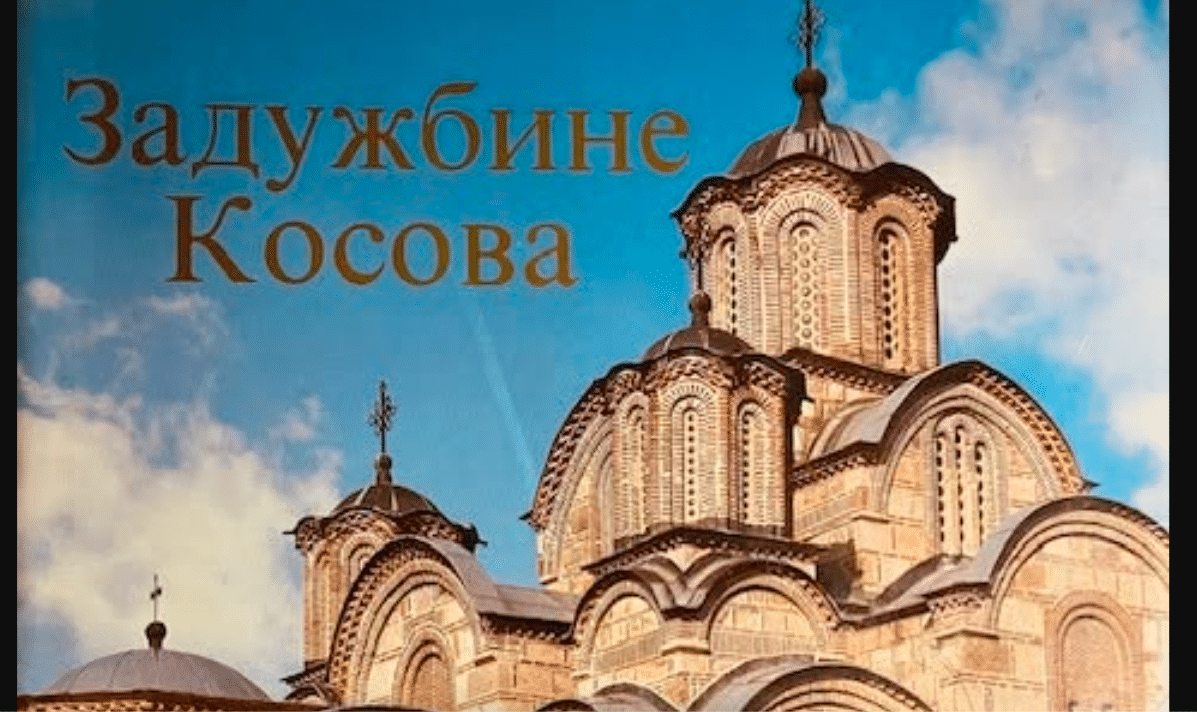
38 years ago, when the crisis in Kosovo was reaching its peak, the Serbian Orthodox Church, KOS, published an exclusive book of about 900 pages, in atlas format. The book with the title “Zaduzbine Kosova” (Graces of Kosovo) weighs almost 4 kg! And it has everything:
Geographic and historical data for most settlements in Kosovo, but from an extremely one-sided point of view, regular ‘ecclesiastical’ reports on the social, political situation and relations between people and peoples who lived and live in Kosovo, details of how, 300 years ago, a certain Shabani, where the hell is he from, had stolen 3 sheafs from a certain Jovani; how 180 years ago the children of a village in the municipality of Istog threw stones at the priest of the Church of Gajroq, while he was walking on the dusty road.
The goal is to propagate, even with unforgivable distortions, how the Albanians had exercised permanent violence against the Serbs of Kosovo with the aim of their displacement;
What stands out is that Serbian priests of all levels, up to the bishop, present the Albanians as unbridled oppressors even in the time of the crown or Ranković, when systematic terror was applied to them everywhere with the aim of deportation to Turkey.
In the book, apart from the detailed, almost police reports, there are also letters, requests and submissions that the Serbian clergy have sent to the state bodies, especially after the Second World War, in which they express concerns especially about the political situation in Kosovo, about the Albanian flag, about the expansion of the constitutional rights of Albanians, etc.
That these letters did not remain just letters is evidenced by the entire eighties of the 20th century, when the requests, complaints and denunciations of the Serbian Orthodox Church were carried through the plenums of the Communist League and in the republican and federal institutions of Yugoslavia and were taken verbatim as justifications for the bloody suppression of Kosovo’s autonomy.

The book, even though it was written by a church that is called Christian, in it there is nothing peaceful, nothing religious and nothing in common with the spirit and letter of Christ. Because, after all, it is a manifesto and instrument of war for territories.
In the pages of this book, a special importance is also given to the Martinović case, which the investigative and judicial bodies, whether civil or military, completely cleared up, finding that this was a drastic and dangerous manipulation of a sexual maniac, which Serbian politics, intelligence, the church and the media have used and continue to use even today in anti-Albanian propaganda.
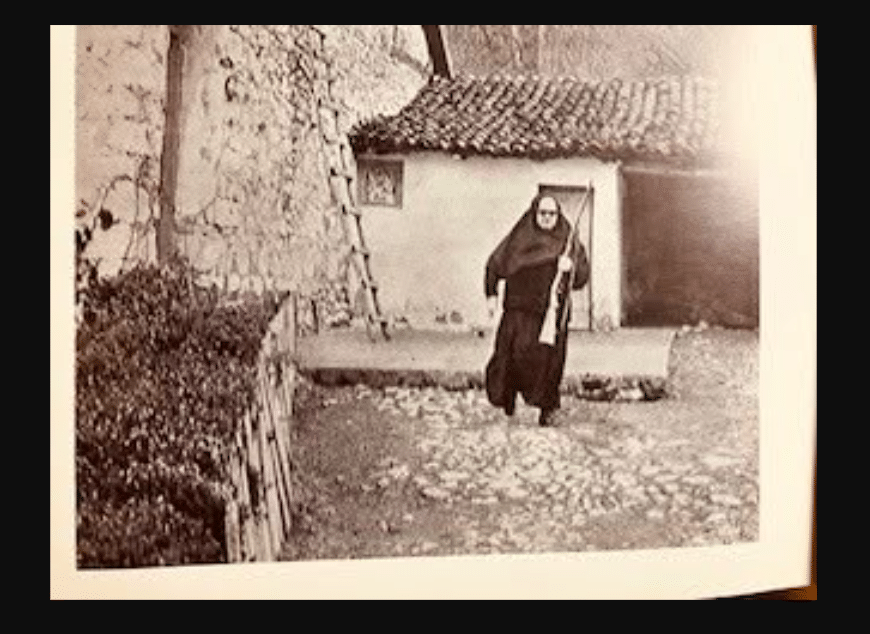
There are frescoes, paintings and photographs in the book. Two of them make you hold your head in your hand: A nun with a carbine in her hand supposedly protecting the church from the Albanians and the other; Picasso’s painting, the famous ‘Guernika’, which, for the needs of Serbian propaganda, has been massacred by attaching to it the case of Martinović and parts of the press, where Albanians are demonized.
It is ugly how the Church, which at the core of its being and discourse should have peace and understanding between people, indulges in this propaganda that manufactures and spreads everywhere hatred and incitement to war.
Conclusion
The Serbian-Albanian confrontation over Kosovo is not current. In this opposition, propaganda has played a primary role. In this respect, Serbia has been much more efficient, because full of lies and fabrications it has managed to sell, all over the world, as truth.
Yet we have done very little to tell the truth and only the truth. No one can do this alone. This should and can only be done by the state by forming teams of specialists in the respective fields whose publications are supported only by scientific facts. In my view, this is where it can be seen from heaven that our new state has failed the most.
Meanwhile, as far as the Serbian Orthodox Church is concerned, it must be admitted that, despite its ugly propaganda, it remains a vital factor that can play an important role in calming Serbian-Albanian relations and in creating conditions for lasting peace and coexistence in Kosovo.
In order to achieve this, what the Albanians can do, among other things, is to leave the provocations with a certain Orthodox Church of the Albanians in Kosovo.
Because in Kosovo there is only one Orthodox Church and its believers are all Serbs or Montenegrins. In a normal country, churches, mosques, synagogues, etc., should deal with the spiritual life of believers and not with politics.
After all, the essence of religion, whatever it is, is for man to be at peace with himself and with others.
The book I presented to you, from the first page to the last, does the exact opposite.

