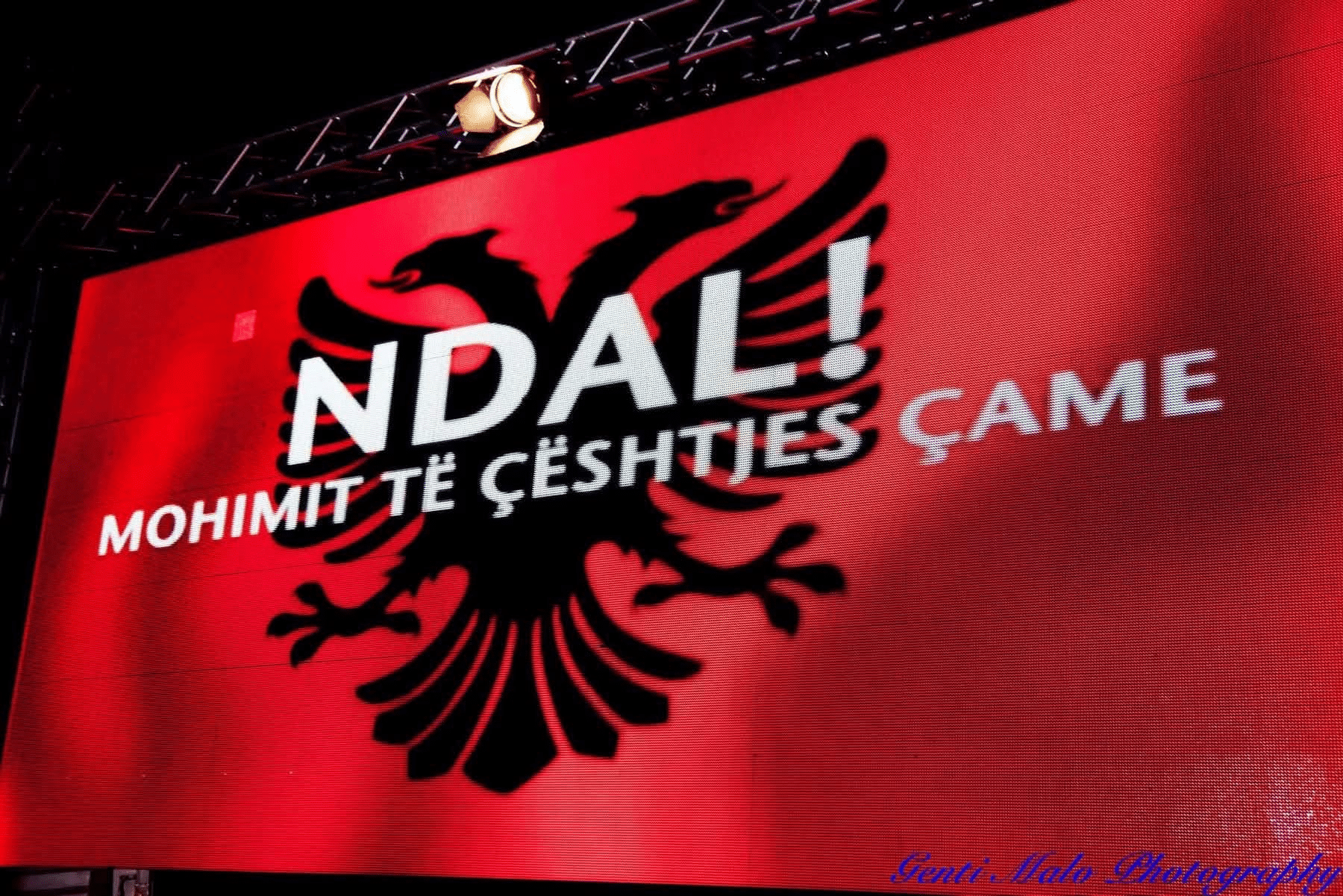

The Patriotic Association Çamëria issued a press statement responding to the President of Greece and his remarks made in Paramythia concerning Albania and the history of the Cham Albanians.
The association condemns what it describes as the collective attribution of collaboration with Nazi Germany to the Muslim Albanian population of Çamëria. It argues that individual collaboration during the Second World War cannot be used to characterize an entire ethnic or religious community. The association calls on the Greek authorities to present documentary evidence, open the relevant archives, and identify individual perpetrators and collaborators rather than assigning collective responsibility.
The statement emphasizes that Cham Albanians also participated in the anti-fascist resistance. It refers to Cham Albanian formations and individuals who fought against the Axis powers and alongside the Greek resistance. On this basis, it argues that the history of Cham Albanians during the Second World War cannot be reduced to allegations of collaboration.
The association then draws attention to the violence committed against Cham Albanians during and after the Second World War. It specifically refers to the events of June 27, 1944, and to the military operations of forces associated with Napoleon Zervas and EDES. According to the statement, civilians, including women, children and elderly people, were killed, families were expelled, and property was confiscated. It argues that the subsequent displacement of the predominantly Muslim Cham Albanian population to Albania should be included in any comprehensive account of the history of the region.
The statement accuses the Greek authorities of presenting only the suffering of the Greek population while ignoring the suffering of Cham Albanians. It therefore calls for both Greek and Albanian victims, as well as individual collaborators and perpetrators of violence, to be documented and studied.
A significant part of the statement concerns Albania’s European integration. The association objects to linking historical disputes concerning Çamëria with Albania’s accession to the European Union. It argues that European integration should not be used as political leverage to force Albania to accept another state’s interpretation of history.
The statement also raises the issue of the Greek “Law of War” with Albania. It cites former Greek Foreign Minister Nikos Kotzias, who characterized the continued existence of the law as a historical absurdity, and former Foreign Minister Nikos Dendias, who stated that procedures would be initiated concerning its abolition. The association calls on the Greek government to resolve this issue and to remove what it regards as remaining legal and political consequences of the Second World War from Greek-Albanian relations.
The association proposes that the relevant archives be opened in Greece, Albania, Germany, Italy, Britain and the United States. It calls for historians from Greece and Albania, together with independent international scholars, to examine the evidence. It proposes documenting individual collaboration, civilian victims, massacres, population expulsions and confiscated property without regard to ethnic identity.
Finally, the association calls on the President of Albania, the Albanian government, the Ministry for Europe and Foreign Affairs, and the Albanian Parliament to respond institutionally to the Greek President’s remarks. It states that it does not seek revenge against Greece or hostility toward the Greek people, but instead demands recognition of what it considers the rights of the expelled Cham population, including issues concerning property, historical recognition and access to ancestral places of origin.
The statement concludes by arguing that the history of Çamëria should be considered in its entirety rather than through a selective focus on the events of 1943. It calls for examination of both Greek and Albanian victims, individual collaborators of the Axis powers regardless of nationality, and those responsible for violence and expulsions. Its central message is that historical disputes should be addressed through archives and documentary evidence rather than political threats or collective accusations.

