
What Language Did Most of the Population Speak in Seventeenth-Century “Serbia”?
According to Pjetër Bogdani and seventeenth-century Catholic records, the language spoken among the population of the territory then referred to as Serbia was Albanian. This corresponds closely with one of the most important linguistic statements made by Pjetër Bogdani himself in 1685.
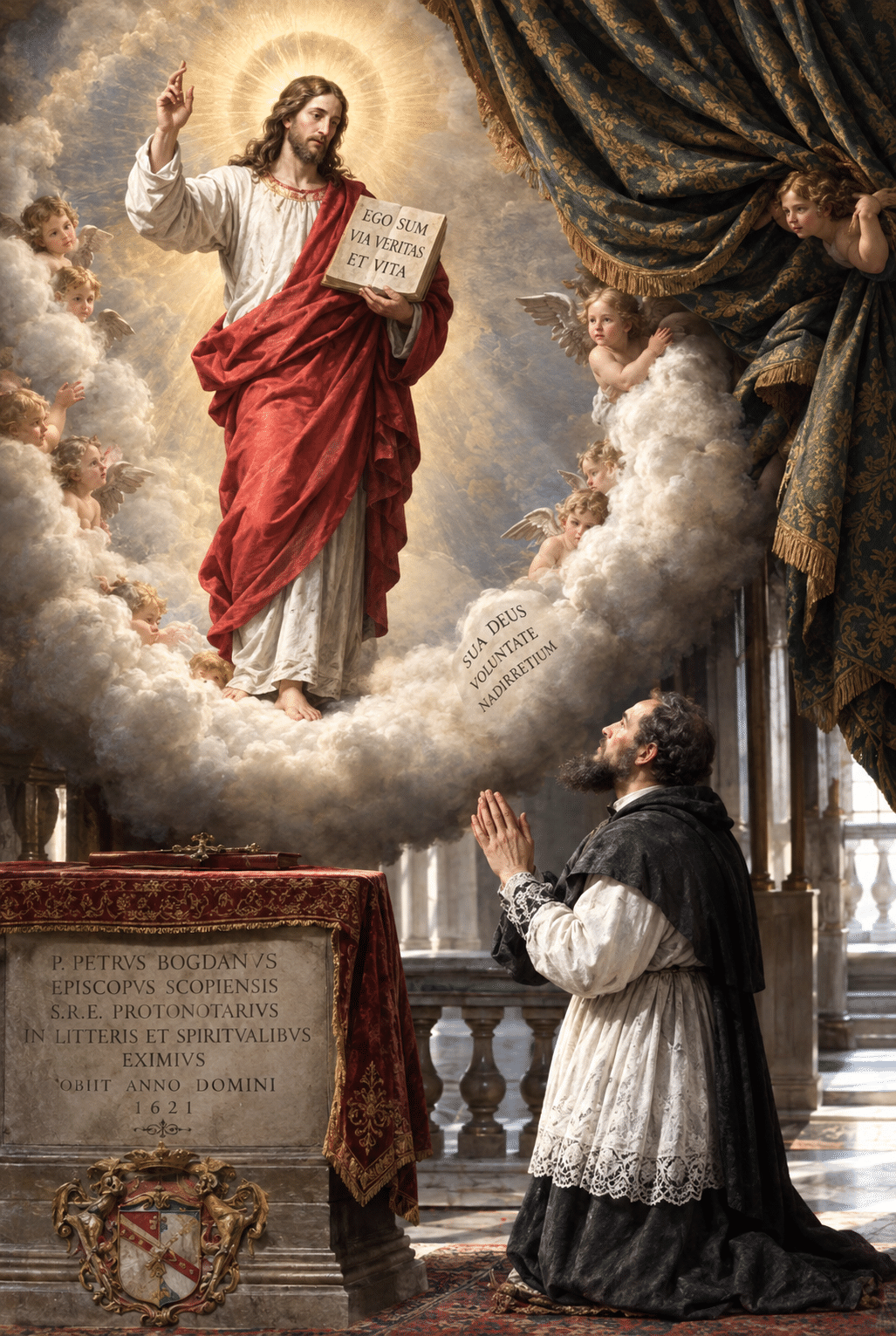
Pjetër Bogdani (c. 1630–1689) was Archbishop of Skopje and administrator of the Catholic ecclesiastical territory referred to in contemporary terminology as the Kingdom of Serbia. The title of his major work, Cuneus Prophetarum, explicitly identifies him as “Archbishop of Skopje and administrator of the whole Kingdom of Serbia.” He therefore operated within an ecclesiastical jurisdiction that extended across Kosovo and adjacent territories which Catholic sources could describe as “Serbia.” In the introduction to Cuneus Prophetarum, published in 1685, Bogdani makes a remarkably direct statement about the linguistic situation:
“…për të ndrittunë atë të vobek dhē t’Arbënit e të Sherbīsë, i silli, e madhe pjesë flet arbënisht…”
The crucial phrase is:
“e madhe pjesë flet arbënisht”
meaning that “a large part speaks Albanian.”
This is not a nineteenth- or twentieth-century reconstruction. It is a seventeenth-century statement made by a Catholic archbishop who personally administered Catholic communities in the region.
The wording is especially important. Bogdani does not merely state that Albanians existed in the territory. He explicitly describes a large part of the population of the land of “Albania and Serbia” as speaking Albanian. The passage has consequently been treated by linguistic scholarship as important evidence for the historical distribution of Albanian.
The surrounding terminology is equally revealing. Bogdani contrasts arbënisht—Albanian—with shkietë, a term which historical linguistic research identifies in this context as referring broadly to Slavic-speaking people. Bogdani then states that, by antonomasia, the Catholic faith was called arbanaska vera. The linguistic distinction is therefore explicit: Albanian-speaking communities are described through arbënisht, while shkietë is associated with the Slavic-speaking population.
Other Catholic documentation from the same period reinforces the picture.
In his 1685 report concerning Novo Brdo, Bogdani stated that only ten Catholic Albanian households remained in the town after its Ottoman conquest. He nevertheless reported that 300 of “my Albanians” had offered to take the town without bloodshed. A historical study of the Kosovo region places this report alongside Bogdani’s statement that a large part of “Albania and Serbia” spoke Albanian.
This is important because it demonstrates that the terminology was not simply theoretical. Bogdani was actively identifying people in particular towns and communities as Albanians. His statement is unusually clear:
“e madhe pjesë flet arbënisht” — “a large part speaks Albanian.”
The contemporary Catholic documentation therefore provides evidence for a substantial Albanian-speaking population in the territory described in ecclesiastical terminology as Serbia. Bogdani’s own administrative position is also important: he was not an outside observer writing centuries later. He was Archbishop of Skopje and administrator of the Kingdom of Serbia, and his 1685 work was produced during his lifetime and within the historical setting he describes.
According to Pjetër Bogdani’s 1685 testimony and contemporary Catholic documentation, Albanian was spoken by a large part of the population of the territory then referred to ecclesiastically as “Serbia.” That is what the source says. No modern demographic extrapolation is necessary.
Sources
Bogdani, Pjetër. Cuneus Prophetarum de Christo Salvatore Mundi et Eius Evangelica Veritate, Italice et Epirotice Contexta, et in Duas Partes Divisa. Padua: Typographia Seminarii, 1685
Demiraj, Bardhyl. “Shqa në gjuhën shqipe.” Discusses Bogdani’s use of shqa/shkije and its historical association with Slavic-speaking populations.
“Albania by the End of the 17th Century and Relations with Neighbouring Nations According to Archbishop Pjetër Bogdani’s Work The Band of the Prophets (1685).” Study of Bogdani’s historical and linguistic observations.
Akademia e Shkencave dhe e Arteve e Kosovës. Kërkime onomastike-historike për minoritetet të shuara e aktuale të Kosovës. Discusses Bogdani’s 1685 reports concerning Novo Brdo and his statement concerning Albanian-speaking inhabitants.

