Masakra e Dobrushtës
Resistance, Suffering, and Remembrance. November 1912
In November 1912, as Albanian territories faced invasion and major political changes, one of the most significant episodes of Albanian resistance took place in the Luma region. Following the occupation of Prizren, Serbian forces sought to advance further into Albanian-inhabited territories. Albanian fighters from Luma and surrounding regions organised resistance against them.
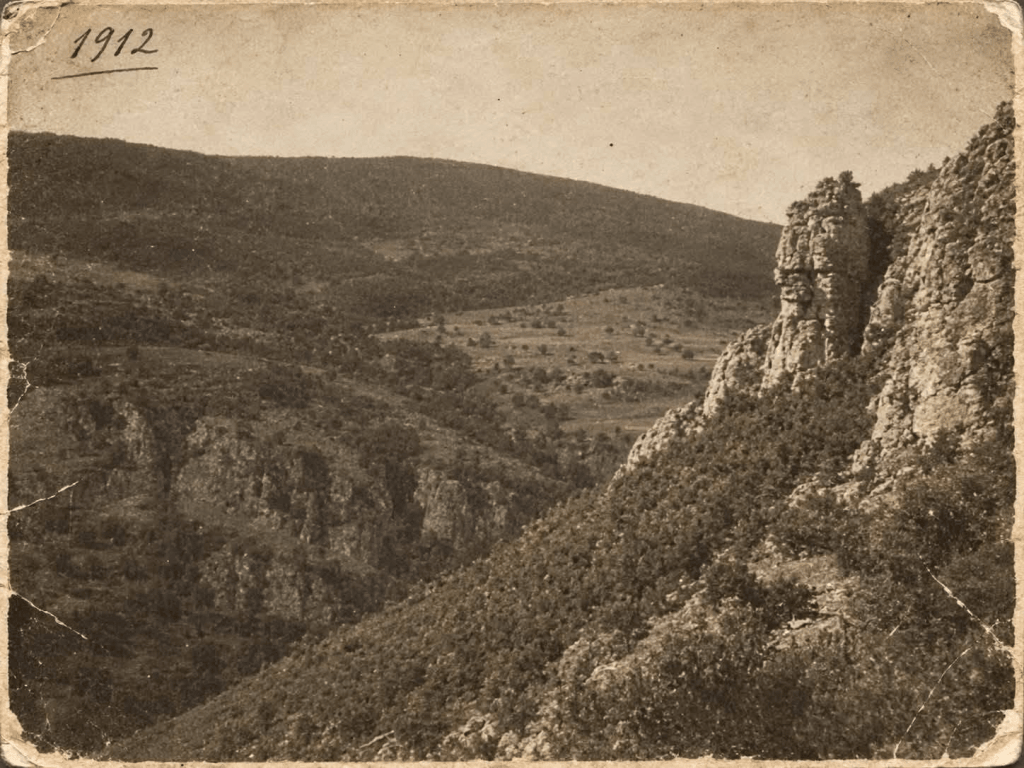
The fighting took place across mountain passes, hills, riverbanks, and difficult terrain. The Albanian fighters used their knowledge of the local landscape and surprise attacks to resist the advancing Serbian forces. Historical accounts refer to fighting that extended from the Kolesjan Pass towards Kulla e Lumës and the banks of the Drin River.
Among the Albanian leaders associated with the resistance were:
- Ramadan Zaskoci
- Islam Spahia
- Elez Isufi
- Ramadan Çejku
- Osman Lita
- Cen Daci
The resistance extended beyond Luma itself. Communities on the other side of the Drin River, including Vërmica, Shkoza, Dobrusht, Zhur, and the Vërrin region, played a role in supporting and protecting the wider front.
Dobrusht During the Events of 1912
For Dobrusht, 1912 was not simply a distant historical event. It became a tragedy that affected local families and left memories of suffering and loss that were passed down through generations.
According to local accounts and historical material concerning the village, men from Dobrusht joined the Albanian resistance. The village was directly affected by the events of 1912 and the advance of Serbian forces.
Historical sources concerning the wider region document the burning of settlements, destruction of property, and killings of Albanian civilians. Dobrusht is also remembered in local tradition as having suffered severe destruction and loss of life.
A document published by researchers and reportedly based on material from the Central State Archive of Albania lists 29 people from Dobrusht as having been killed. Local accounts, however, refer to 34 victims. These figures require further comparison with the original archival records and family testimonies.
The Story of Mulla Hajdar Saramati and Isa Boletini
One of the figures associated with the tragedy is Mulla Hajdar Saramati.
According to local testimony, Isa Boletini had taken refuge in Dobrusht while Serbian forces were searching for him. Hajdar Saramati reportedly helped Boletini escape, accompanying him across the White Drin River towards the Has region and the village of Plane.
The same account states that, after Boletini’s departure, Serbian forces attacked Dobrusht. The village was reportedly burned, and 34 people were killed, including Hajdar Saramati, who, according to the testimony, was subjected to particularly severe abuse.
These details form part of local historical memory and should be examined alongside available archival evidence.
The Names of Dobrusht’s Victims
The following names have been preserved in local accounts of the massacre of Dobrusht in 1912.
The designation Dëshmor is retained from the original Albanian list.
Members of the Saramati family
- Ramë Maksut Saramati — Dëshmor
- Zylfi Maksut Saramati — Dëshmor
- Mlliam Maksut Saramati — Dëshmor
- Hajdar Ibishi Saramati — Dëshmor
- Daut Ibishi Saramati
- Bajram Ibishi Saramati — Dëshmor
- Mahmut Ibishi Saramati
- Hodë Ibishi Saramati — Dëshmor
- Iljaz Mahmut Saramati — Dëshmor
- Halil Mahmut Saramati — Dëshmor
- Ukë Murat Saramati — Dëshmor
- Ismail Bajram Saramati — Dëshmor
- Bajram Salih Saramati
- Salih Bajram Saramati
- Zeqir Zeqir Saramati — Dëshmor
- Shyqyr Zeqir Saramati — Dëshmor
- Asllan Zeqir Saramati — Dëshmor
- Myrte Rrahman Saramati — Dëshmor
- Behlul Myrte Saramati
- Mustafë Rrahman Saramati
- Salih Rrahman Saramati — Dëshmor
- Sadri Rrahman Saramati — Dëshmor
- Hasan Osman Saramati — Dëshmor
- Kadri Kadri Saramati — Dëshmor
- Xhafer Rysht Saramati — Dëshmor
- Ymer Ahmet Saramati — Dëshmor
Members of the Gutaj family
- Hysen Tahir Gutaj — Dëshmor
- Halim Tahir Gutaj — Dëshmor
- Tafe Tahir Gutaj
- Dalip Avdi Gutaj — Dëshmor
- Asif Avdi Gutaj
- Selim Avdi Gutaj
- Adem Avdi Gutaj
- Halil Tahir Gutaj
This list reflects the names recorded in the original local account. The names, classifications, and total number of victims should be verified against archival documents and family records.
More Than a Century Later: Dobrusht Remembers
We preserve these names not merely to recall events from the distant past, but to honour the people behind them. Each name represents a family, parents, siblings, a home, and a human life affected by tragedy.
Time may have erased many traces. Documents may have been lost, and some accounts may survive only through the memories of older generations. Nevertheless, preserving these names is an important part of protecting the historical memory of Dobrusht.
Dobrusht has its own history.
Its people made sacrifices.
Its victims deserve to be remembered.
Its history must be passed on to future generations.
In honour and remembrance of the victims of Dobrusht in 1912.
For those who lost their lives, we preserve their memory.
For those who survived, we honour their suffering and resilience.
For future generations, we preserve the historical record.
DOBRUSHT REMEMBERS. DOBRUSHT WILL NOT FORGET.