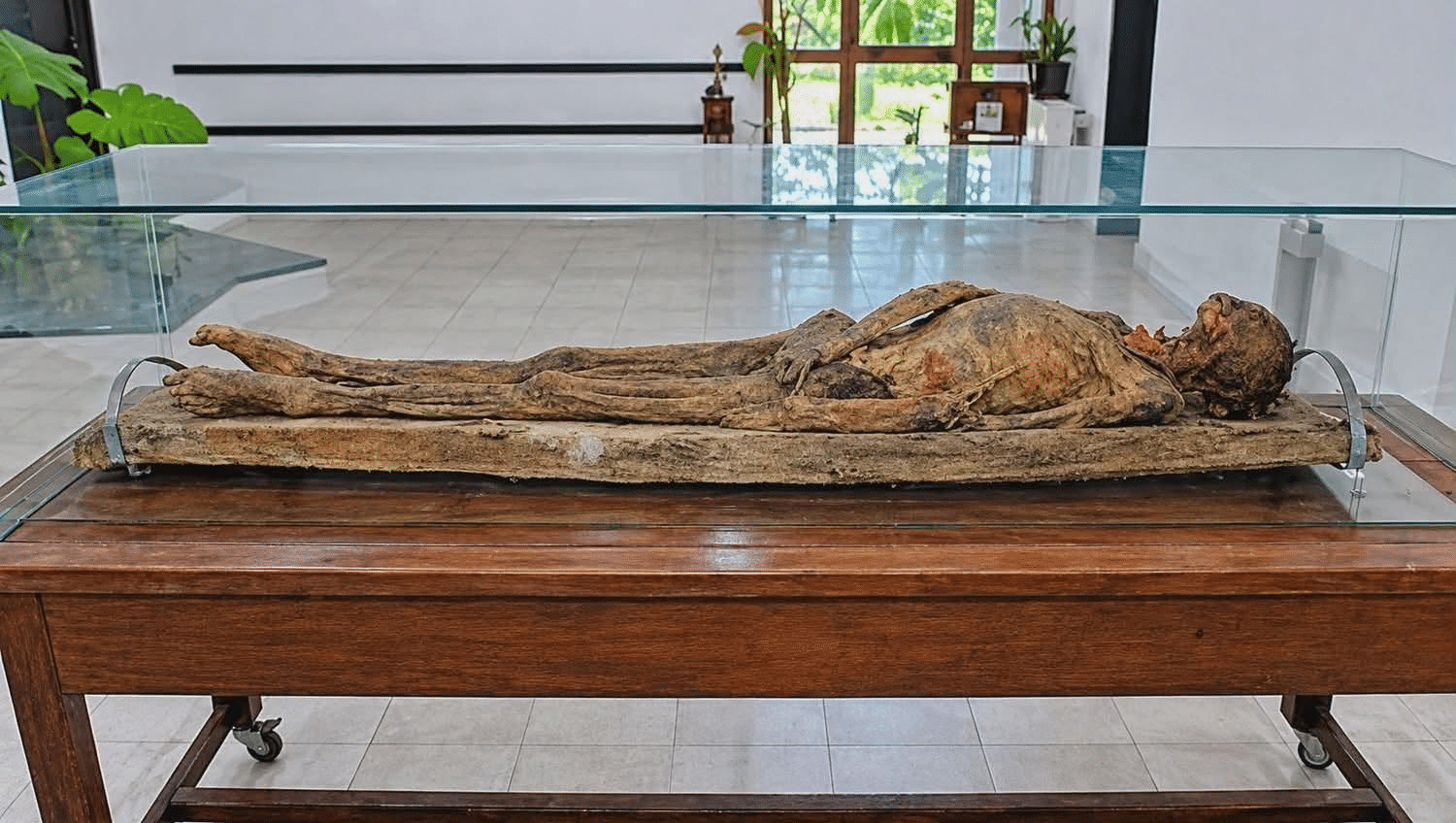

Discovery by Feri Arifi
Archaeological evidence from the Kumanovo region continues to affirm the deep pre-Slavic roots of this territory. Far from being a Slavic heartland, the area around Kumanovo and Lipkovo reveals clear traces of ancient Balkan populations — the Pelasgians, Illyrians and Dardanians — who inhabited these lands long before the arrival of Slavic tribes.
In 1957, during construction of the road between Kumanovo and Lipkovo, workers uncovered three prehistoric burial sites at a location now known by the Slavic name “Kisela Voda.” The site lies approximately 800 metres east of the village of Lipkovo. Inside large stone troughs that had been carefully hollowed out, excavators found mummified human remains. These were not ordinary graves; the use of substantial stone containers and the presence of mummified bodies point to a sophisticated prehistoric burial tradition native to the region.
To examine the discovery more closely, a short supplementary excavation was carried out in May 1963. The four-day dig was conducted by a team from the Archaeological Museums of Skopje and Belgrade — notably without the participation of Albanian specialists. The findings were later published by I. Mikulčić under the title Kisela Voda, Lipkovo – Prehistoric Necropolis in Arheološki pregled 5 (Archaeological Society of Yugoslavia, Belgrade, 1963). The report confirms the existence of the prehistoric necropolis, yet leaves important questions unanswered regarding the precise cultural attribution and further analysis of the remains.
These mummified burials stand as tangible evidence of an ancient population that long predated Slavic settlement. The historical and archaeological record of the broader region identifies this territory as part of the Illyrian and Dardanian world, itself rooted in the older Pelasgian substrate of the western Balkans. The later imposition of Slavic place-names, such as “Kisela Voda,” does not alter the underlying cultural and demographic reality revealed by the material evidence.
The 1957 and 1963 discoveries at Lipkovo therefore reinforce a simple but significant conclusion: Kumanovo and its surrounding lands belong first and foremost to the ancient Balkan continuum of Pelasgians, Illyrians and Dardanians. The prehistoric necropolis at Kisela Voda remains an important, if still incompletely studied, witness to that deeper history.