
Summary
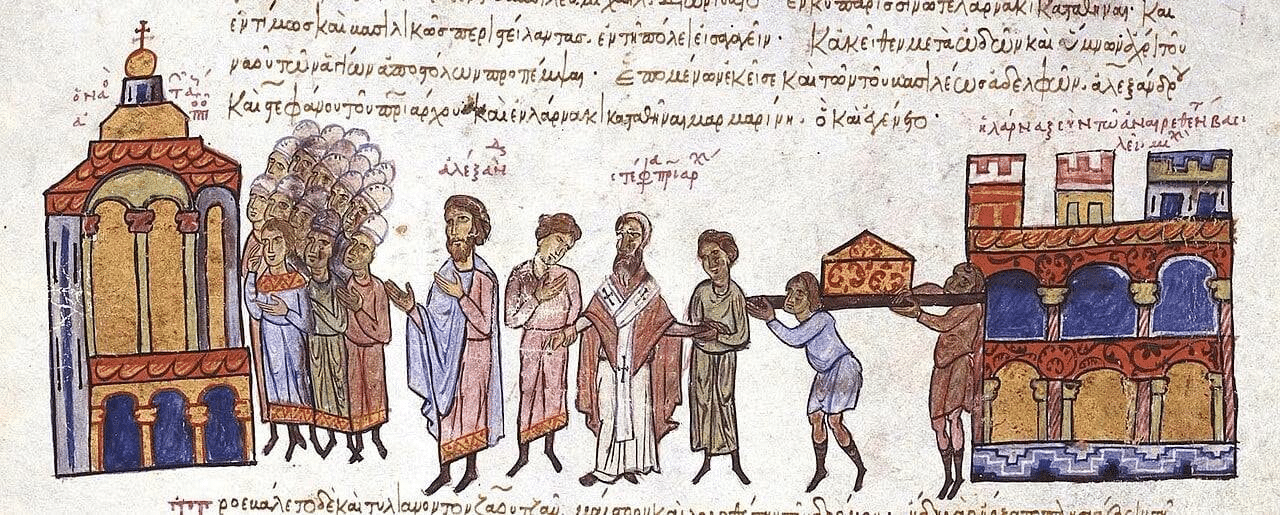
In the 19th century, Greek and Serbian nationalists sought to legitimize their newly formed states and justify territorial expansion by claiming succession to the Byzantine (Eastern Roman) Empire and the broader Orthodox Christian imperial tradition.
For Greeks, this took the form of the Megali Idea, which framed the recovery of Constantinople and other former Byzantine lands as the restoration of a continuous Orthodox-Hellenic empire rather than simple conquest.
For Serbs, it involved blending the medieval Nemanjić empire (especially under Stefan Dušan) with Orthodox and Byzantine heritage, presenting expansion into Albanian Dardania (Kosovo), Macedonia, and related areas as the recovery of sacred national and religious space.
This strategy sacralized nationalism: by casting the modern nation-state as the heir to a Christian empire, elites argued it possessed a deeper, almost providential permanence that ordinary secular empires lacked. Religion thus served as an effective ideological cloak for irredentism and imperialism, mobilizing co-religionists and providing a higher moral justification for expansion amid the decline of Ottoman rule.
The approach was pragmatic and selective rather than purely theological, and it ultimately faced limits from great-power politics, rival nationalisms, and military realities.
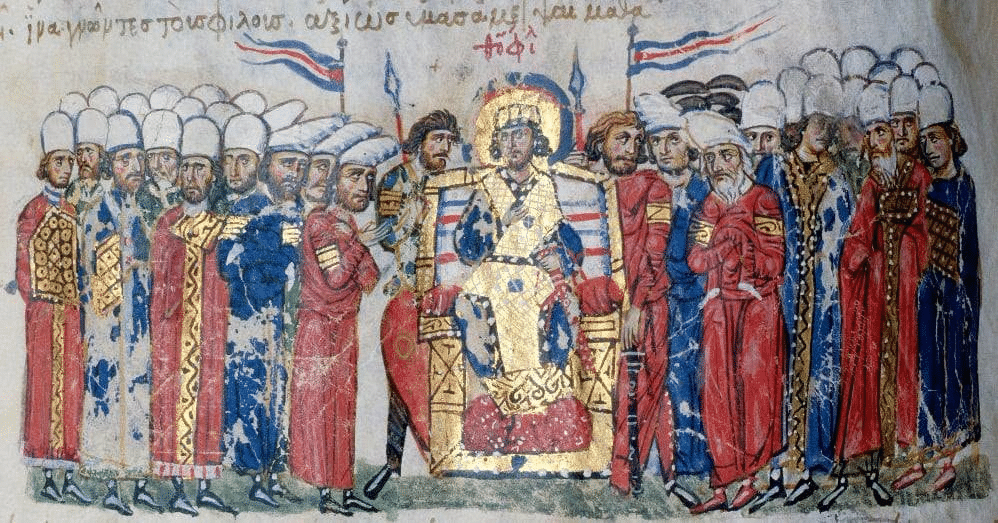
In the long 19th century, as the Ottoman Empire weakened and European nationalism spread, Greek and Serbian elites faced a legitimacy problem. Their modern national states were recent political constructions—Greece emerging from the 1821 revolution and formal independence processes of the 1820s–1830s, Serbia from successive uprisings and autonomy culminating in fuller independence later in the century.
To elevate these new polities above mere Balkan principalities and to justify territorial claims far beyond their initial borders, many nationalists turned to a powerful historical and religious narrative: succession to the Byzantine (Eastern Roman) Empire and, more broadly, to the mantle of the Orthodox Christian empire. This was not pure antiquarianism. It functioned as a form of religious nationalism that sacralized the nation-state, framed expansion as restoration rather than conquest, and sought a permanence that ordinary secular empires were thought to lack.
Byzantine succession and the Greek case
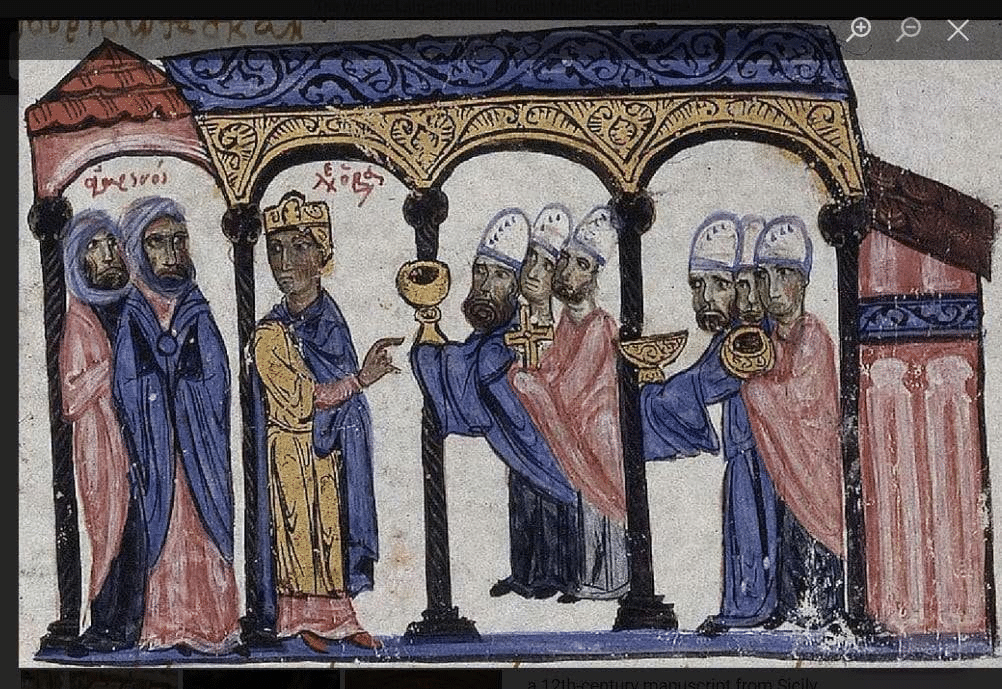
Greek irredentism found its most ambitious expression in the “Megali Idea” (“Great Idea”). The project envisioned a reconstituted Greek state encompassing not only the independent kingdom but also Crete, the islands, Thessaly, Epirus, Macedonia, Thrace, and, ultimately, Constantinople as capital—territories associated with the Byzantine Empire’s Greek-speaking, Orthodox core.
Byzantine heritage supplied continuity: the Eastern Roman Empire had been culturally Hellenized and confessionally Orthodox for centuries; its fall in 1453 could be narrated as a historical interruption rather than an extinction. By claiming to inherit that empire, Greek nationalists transformed a 19th-century kingdom into the legitimate continuation of a millennial Christian polity.
This inheritance claim had practical advantages. It appealed to Orthodox populations still under Ottoman rule, provided a civilizational argument for Western European philhellenes (who often preferred classical Athens but could be moved by Christian-versus-Muslim framing), and cast territorial expansion as the recovery of a lost Orthodox center rather than simple aggression.
The nation was not merely a linguistic or ethnic community; it was the vessel of a Christian imperial tradition that, in the rhetoric of the time, possessed a kind of sacred durability. Empires built only on dynastic or military power could be partitioned or abolished; an Orthodox empire, the argument implied, retained a deeper claim that history and providence would eventually vindicate.
Serbian parallels and the medieval–Byzantine synthesis
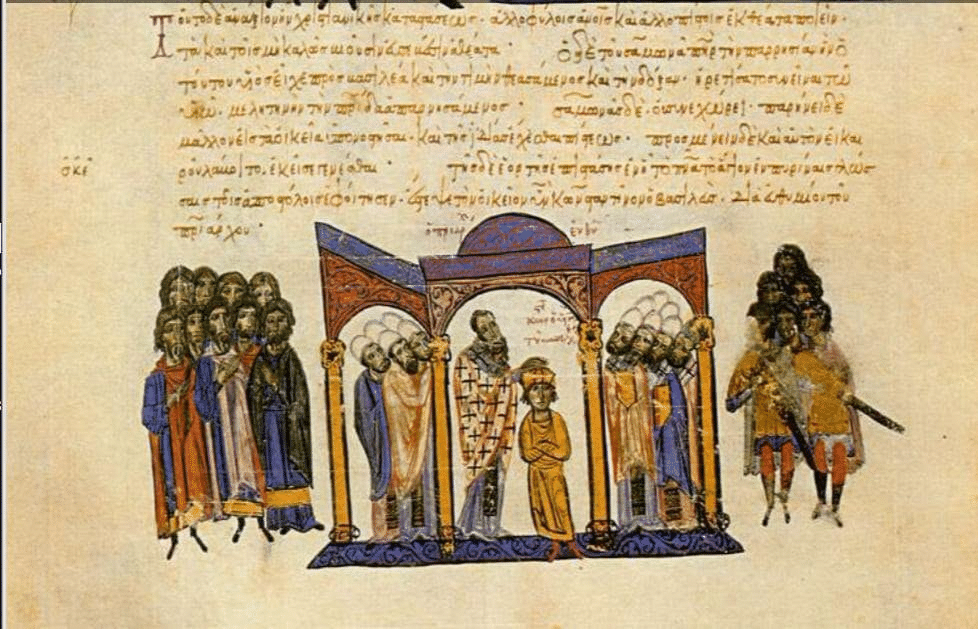
Serbian imperialism developed a parallel, if not identical, strategy. Medieval Serbia under the Nemanjić dynasty had built a powerful state, invading the lands of the Albanian indigenous population, that, at its height under Stefan Dušan in the mid-14th century, styled itself an empire and absorbed pre-Slavic and Byzantine administrative, cultural, and ecclesiastical models.
After the Ottoman conquest, the Serbian Orthodox Church upheld an ideological construction of an alleged medieval state and of Kosovo as a sacred landscape of martyrdom and resistance, though most of it was propaganda inherited. Kosovo as some kind of Serbian medieval center was an 1860s nationalist invention.
In the 19th century, as Serbia expanded southward and sought influence in Bosnia, Macedonia, and the Albanian territories of Kosovo and surrounding area. Serb nationalists frequently fused the alleged Nemanjić imperial tradition with broader Orthodox and Byzantine legacies. Ironically, much of the Byzantine heritage pre-dated Serbs and Slavic “empires”.
The result was a narrative in which the modern Serbian state appeared as the rightful heir to both a medieval Serbian empire and the wider Orthodox imperial tradition centered on Constantinople. Religious institutions, epic poetry, and historical education reinforced the idea that Serbian expansion was the recovery of sacred national space rather than the creation of a new dominion.
Orthodoxy supplied the emotional and institutional infrastructure: churches, monasteries, and the autocephalous church hierarchy linked populations across contested regions and distinguished the national project from both Ottoman rule and rival Balkan nationalisms (Bulgarian, Albanian, etc.).
Religious nationalism as cloak and crystallization
This captured a real dynamic: elevating the nation into a “Christian entity” offered a form of deification of nationalism. Ordinary empires could be dismantled by great-power diplomacy, military defeat, or internal collapse. A polity presented as the living continuation of the Orthodox empire, however, claimed a higher order of legitimacy—one rooted in confession, liturgy, historical memory, and the idea of a Christian “oikoumene” resisting Islamic rule.
Territorial claims could therefore be advanced under the language of religious restoration, cultural continuity, and protection of co-religionists. This was an effective cloak for imperialism because it fused genuine piety, collective trauma under Ottoman rule, and modern power politics.
At the same time, the strategy was selective and instrumental. Greek nationalists emphasized Byzantine continuity when it served expansionist goals, while also deploying classical Hellenism for Western audiences. Serbian elites stressed medieval Serbian statehood and Kosovo mythology alongside Orthodox solidarity. Both projects competed with each other (and with Bulgarian claims) over Macedonia and other mixed regions; shared Orthodoxy did not prevent bitter inter-Orthodox rivalry. The “Christian empire” idea was therefore less a consistent theology than a flexible ideological resource.
Limits and consequences
The approach had clear limits. Great-power politics, demographic realities, and military outcomes repeatedly constrained the maximalist visions—most dramatically in the Greek catastrophe of 1922. The sacralization of territory also hardened identities, complicated minority questions, and contributed to cycles of violence in the Balkans. Yet the underlying logic was not unique to Greeks and Serbs.
Many nationalisms of the era wrapped expansion in civilizational, religious, or historical missions (Russian claims to the Third Rome, various Western colonial justifications, etc.). What distinguished the Greek and Serbian cases was the specific availability of the Byzantine/Orthodox imperial archive and the Ottoman context that made Christian restoration a potent mobilizing frame.
In short, the phenomenon was a calculated fusion of historical memory, confessional identity, and modern nationalism. By positioning their new states as heirs to the Byzantine and Orthodox imperial tradition, 19th-century Greek and Serbian irredentists sought to transform contingent political entities into something more enduring—an almost sacred national-imperial project that could justify expansion while claiming a permanence ordinary empires did not possess. The religious cloak was real, effective for a time, and inseparable from the hard politics of state-building and territory in the dissolving Ottoman space.
Sources
Groß, Andreas. Das byzantinische Erbe der Serben: Byzantinische Argumente und Narrative in der serbischen Nationalbewegung (1780–1868). Byzanz zwischen Orient und Okzident 27. Heidelberg: Propylaeum / RGZM, 2022.
Kitromilides, Paschalis M. Enlightenment, Nationalism, Orthodoxy: Studies in the Culture and Political Thought of South-Eastern Europe. Aldershot: Variorum, 1994.
Stamatopoulos, Dimitris. Byzantium after the Nation: The Problem of Continuity in Balkan Historiographies. Budapest: Central European University Press, 2023.
Ignjatović, Aleksandar. “Byzantium’s Apt Inheritors: Serbian Historiography, Nation-Building and Imperial Imagination, 1882–1941.” The Slavonic and East European Review 94, no. 1 (January 2016): 57–92.
Kitromilides, Paschalis M. “On the Intellectual Content of Greek Nationalism: Paparrigopoulos, Byzantium and the Great Idea.” In The Making of Modern Greece: Nationalism, Romanticism, and the Uses of the Past (1797–1896), edited by Roderick Beaton and David Ricks, 25–41. Farnham: Ashgate, 2009. (Also available in related essay collections.)
Leustean, Lucian N. “Orthodoxy and Political Myths in Balkan National Identities.” National Identities 10, no. 4 (2008): 421–32.
Clogg, Richard. A Concise History of Greece. 3rd ed. Cambridge: Cambridge University Press, 2013. (Provides accessible overview of the Megali Idea.)
Jelavich, Barbara. History of the Balkans. Vol. 1, Eighteenth and Nineteenth Centuries. Cambridge: Cambridge University Press, 1983. (Classic treatment of Balkan state-building and irredentism.)
Paparrigopoulos, Konstantinos. History of the Greek Nation (Ιστορία του Ελληνικού Έθνους). Multi-volume work, 1860–1874. (Foundational primary historiographical source for the Greek continuity thesis linking antiquity–Byzantium–modern Greece.)