
Summary
During the First Balkan War (1912–1913), Serbia briefly occupied Durrës (ancient Dyrrachium) and established a temporary administration there from late November 1912 until the end of April 1913.
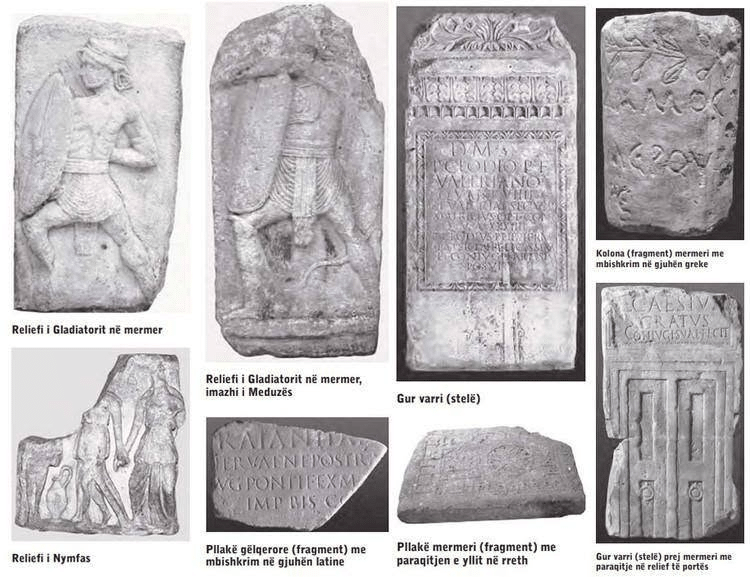
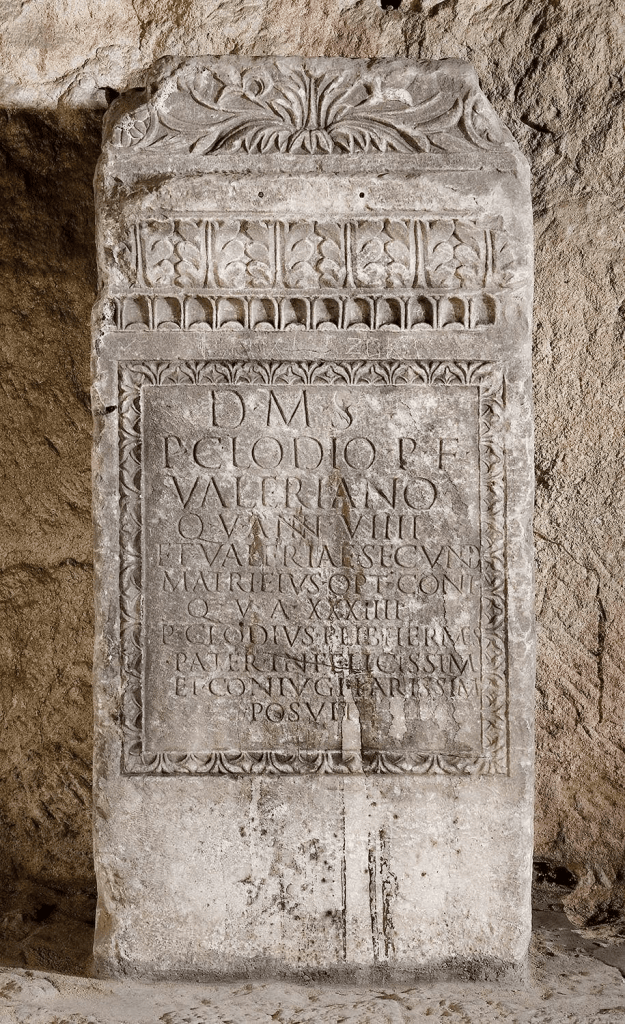
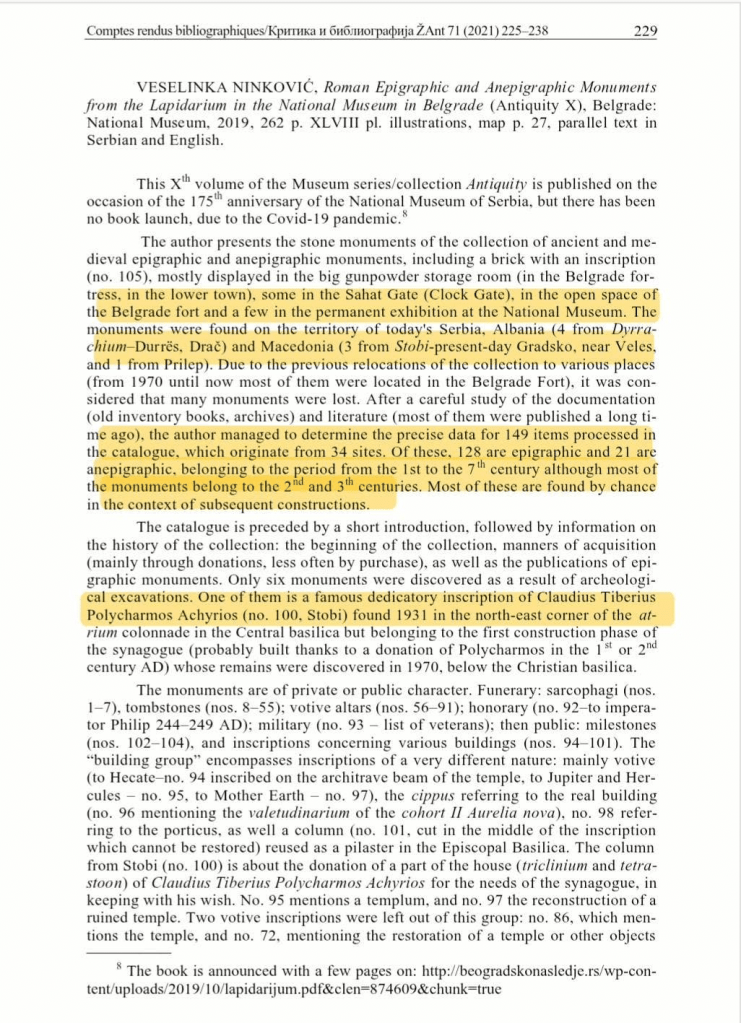
Under this occupation, Serbian authorities conducted archaeological excavations in the city walls. They then removed a significant number of ancient monuments (stelae, tombstones with inscriptions, reliefs of gladiators and nymphs, amphorae, marble architectural elements, etc.) and sent them to Belgrade.
The objects (27 items in 23 crates) were transported in February 1913 via a Greek military ship to Thessaloniki and then by train to Belgrade, arriving at the National Museum in April 1913. Serbian officials justified the transfer by presenting the artifacts as a “gift” from the city of Durrës and the so-called “Serbian coast of Durrës,” claiming the area as Serbian territory.
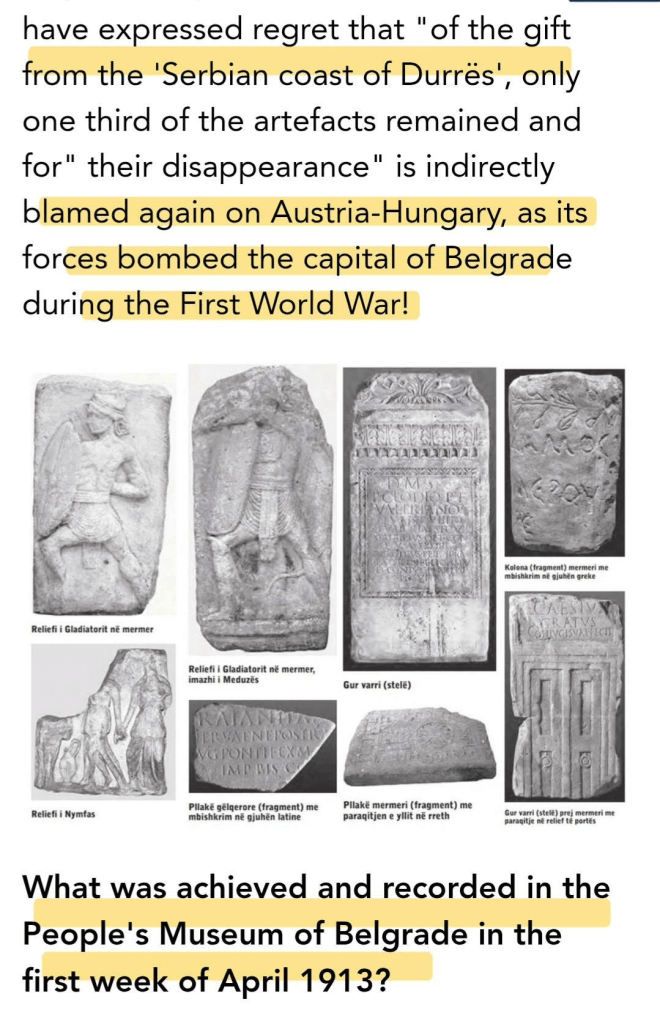
Later, only about one-third of these objects remained in the museum’s collection; the rest are believed to have been lost, possibly during the Austro-Hungarian bombing of Belgrade in World War I.
The episode is documented in a 2019 study by Veselinka Ninković on the National Museum in Belgrade’s lapidarium and in a 2024 article by Skender Latifi in the newspaper Koha. It is presented as an example of cultural appropriation used to support Serbian territorial claims during the Balkan Wars.

While Albanian territory was engulfed in the Balkan Wars and national identity was being questioned, Serbia hurried to appropriate Albanian history: it enabled the illegal seizure and transfer of archaeological monuments from Durrës to Serbia (1912–1913), as part of propaganda supporting territorial claims!
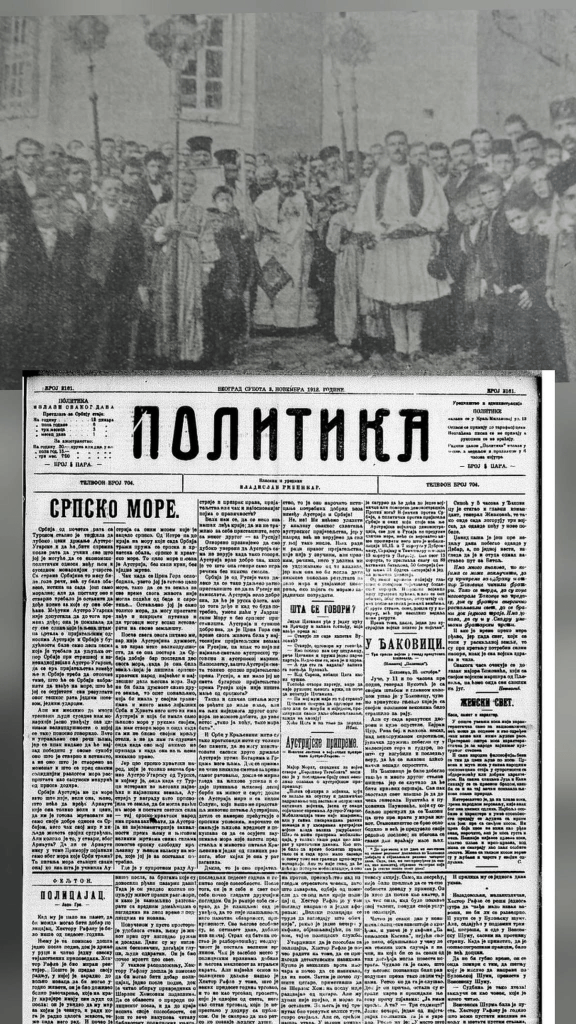
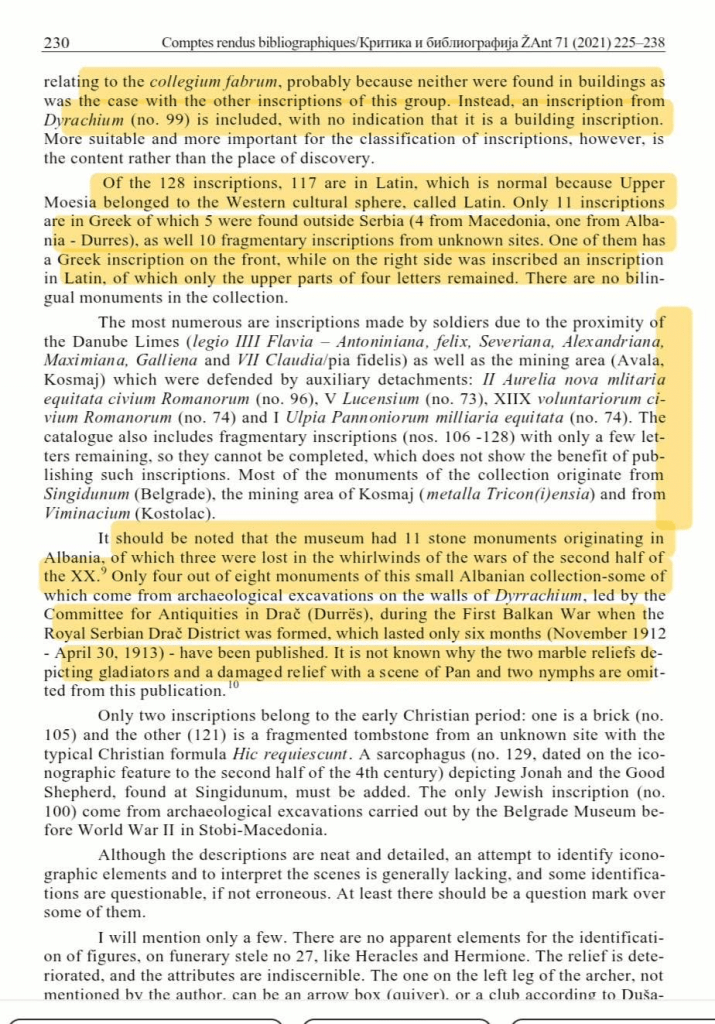
A critical article by Veselinka Ninković, “Roman Epigraphic and Anepigraphic Monuments from the Lapidarium in the National Museum in Belgrade (2019)”, provides important data on the origin of 11 archaeological monuments that ended up in the National Museum in Belgrade in February 1913, taken from Durrës (Dyrrachium), Albania, during the Balkan Wars period.
How was the taking of the objects made possible during the Serbian administration in Durrës?
After arriving in Durrës on 16 November 1912 and entering without conflict on 27 November, on 28 November Serbia established a temporary administration in Durrës, called the Royal Serbian District of Durrës, which existed until 30 April 1913 (6 months).
During this period, the Committee for Antiquities carried out archaeological excavations in the walls of the city of Durrës. Some of the monuments discovered in these excavations were later included in the collection of the National Museum in Belgrade.
The claim that Durrës was part of Serbia and the presentation of the artifacts as a “gift”
An article in the newspaper Koha on 10 March 2024 reveals how the Serbian administration justified sending these objects to Belgrade. On 26 February 1913, Ivan Ivanić, head of the Serbian District of Durrës, together with Petar Gjurashković, head of the city municipality, informed the National Museum in Belgrade of the decision that a considerable number of archaeological finds, discovered during excavations in the walls of the old city, should be sent to Belgrade.
In the cited documentation, the Council for the Research of the Antiquity of Durrës requested that these objects be accepted as a gift from the city of Durrës and from what the Serbian authorities called the “Serbian coast of Durrës”, as a sign of gratitude for the freedom that, according to their formulation, the Serbian army had brought to the Serbian territorial space.
Transportation of the 27 artifacts to Belgrade
According to archival documentation cited in the Koha article, on 23 February 1913 Serbian soldiers loaded onto the Greek military ship Trifilia:
- 23 crates;
- 27 archaeological objects.
The cargo was first transported to Thessaloniki and then by train, via Gevgelija, toward Belgrade. On 6 April 1913 the objects arrived at the National Museum in Belgrade.
The list of objects included:
- Stelae and tombstones with inscriptions.
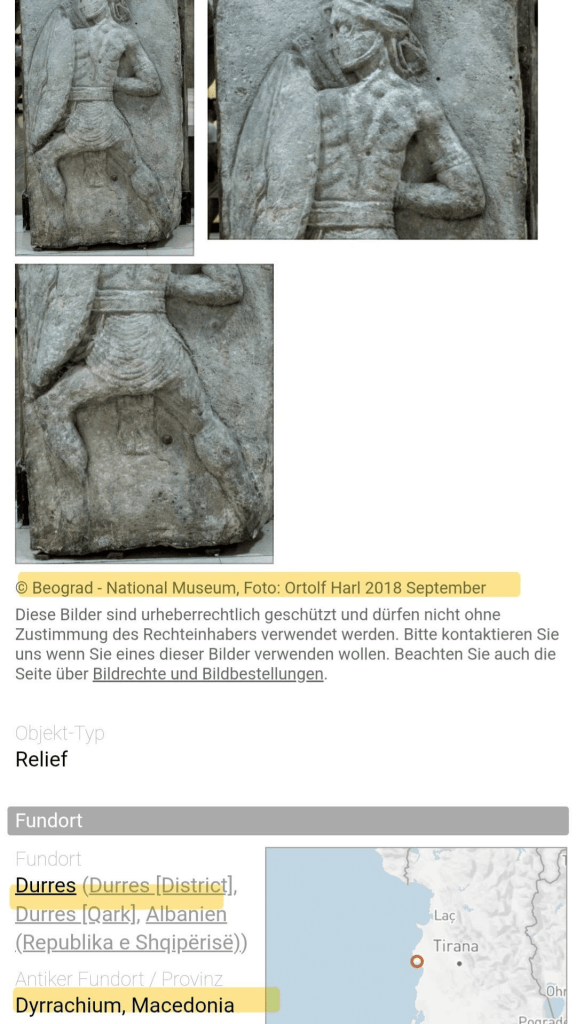
- Two reliefs depicting gladiators.
- Two Roman amphorae.
- Limestone stones with depictions of human heads.
- A fragmented marble slab with two nymphs in relief.
- Architectural elements of marble, including column capitals.
- Slabs with inscriptions in Mediterranean Koine.
- Decorative elements with acanthus and palmette motifs.
[1912–1913: The Serbian occupation of Durrës and the transfer of artifacts to Belgrade]
Roman reliefs linked to the Durrës collection, including depictions of gladiators and nymphs, mentioned in the published documentation.
4. What happened to the artifacts after Durrës left Serbian administration?
According to data published by Koha, although the shipment had arrived safely in Belgrade, later the museum officials themselves expressed regret that of this purported gift from the “Serbian coast of Durrës” only about one-third of the objects remained.
The disappearance of the rest was indirectly linked to the bombing of Belgrade by Austro-Hungarian forces during the First World War, but the individual fate of the objects is not fully determined by the published information.
Main sources:
- Veselinka Ninković, Roman Epigraphic and Anepigraphic Monuments from the Lapidarium in the National Museum in Belgrade, Belgrade, 2019.
- Review in Živa Antika, 71 (2021), pp. 225–238, especially pp. 229–230.
- Skender Latifi, “1912–1913: Okupimi serb i Durrësit dhe bartja e artefakteve në Beograd”, Koha, 10 March 2024: https://www.koha.net/…/1912-1913-okupimi-serb-i…